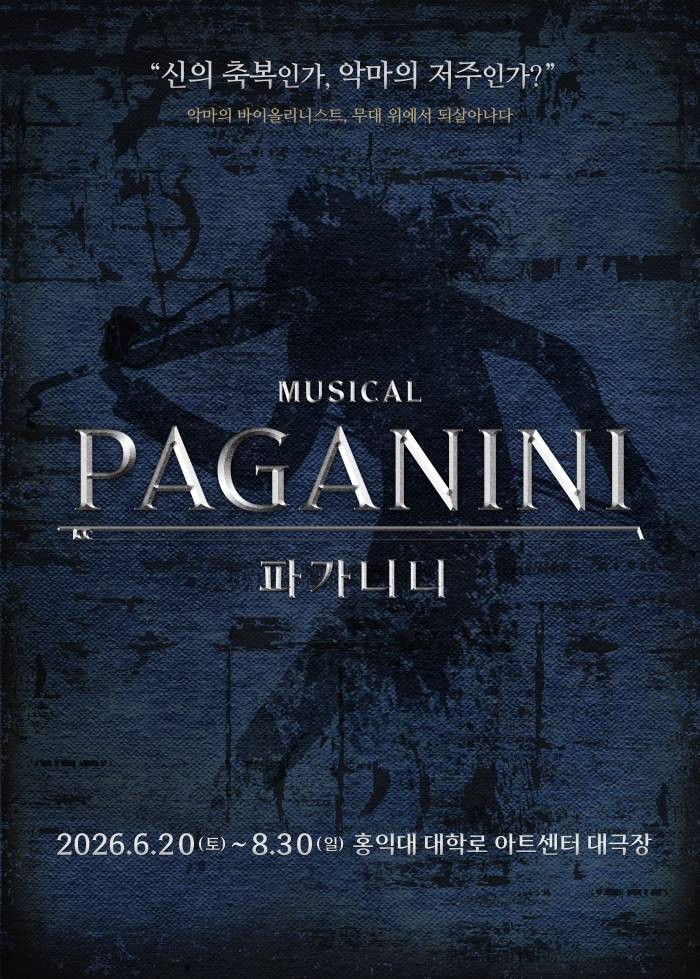

For most people, the name Paganini conjures an immediate image: the devil's violinist. Niccolò Paganini dominated 19th-century Europe, and his playing was so supernaturally brilliant that contemporaries whispered he had strung his violin with a woman's intestines, and pointed fingers at him as someone who had sold his soul to the devil in exchange for his gift. Awe at his genius curdled, almost instantly, into fear and revulsion.
Paganini takes its starting point from a real event: after Niccolò Paganini's death, his body was refused burial in a Catholic cemetery because of the stigma of being branded a demon.
A Human Face Restored in the Courtroom
The play opens with the desperate plea of Achille, Paganini's son, who has come before a court to fight for his father's honor and his right to rest in peace. His anguished cry — to remember his father not as a demon but as a human being — flows naturally into a series of flashbacks. Within this frame narrative, the audience is finally allowed to encounter the real life of Paganini, the man who had long been obscured by rumor.
The work does not take the sensationalist route of dwelling on a genius's madness and isolation. Instead, it works through Achille's gaze to restore the human Paganini from the myth that had imprisoned him. Rather than an object of fear, the Paganini we see here is a tender father, a solitary artist, and a Romantic who wrestled deeply with the spirit of his age.
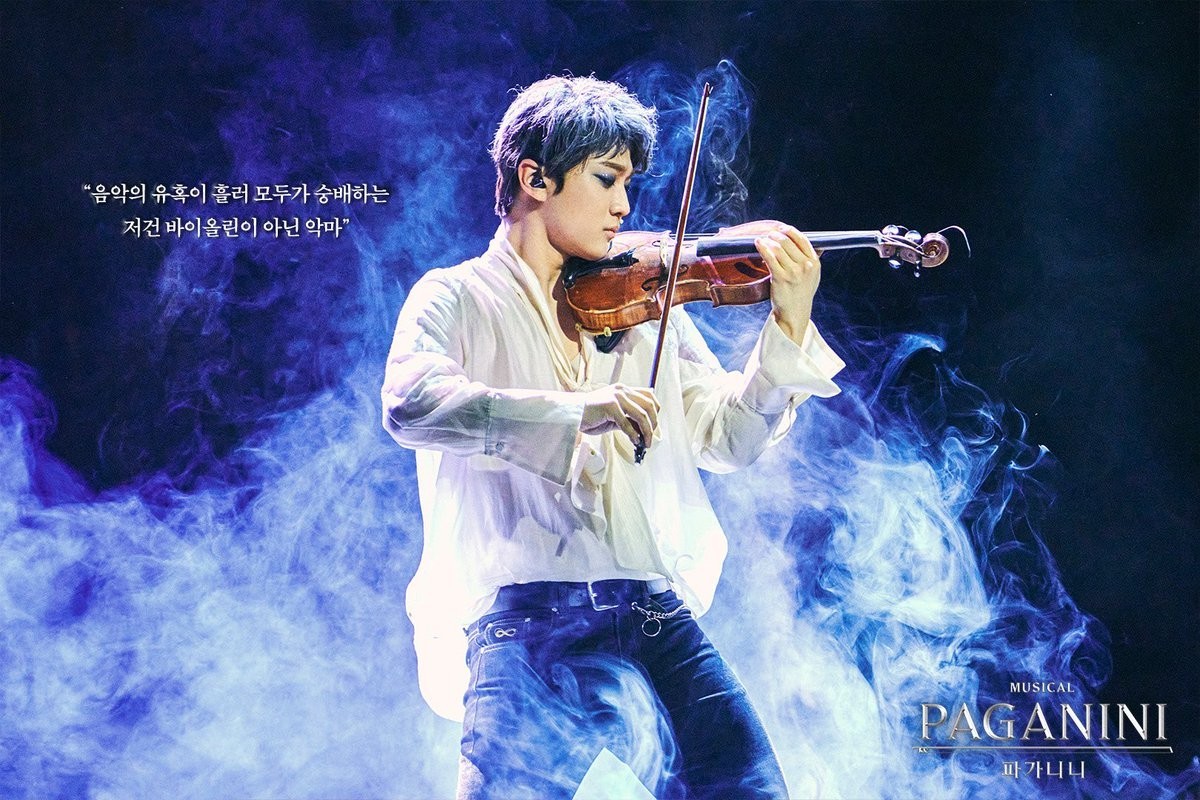
If even one person truly feels my music, that is enough
This single line of dialogue captures, more than anything else, the essence of Paganini as the work understands him. In the show, Paganini is nothing more — and nothing less — than a pure performer who believed in and loved his music to the very end, caring little for the world's approval.
Competing Frames, Competing Gazes
The work draws out the full complexity of its central figure by placing him at the intersection of sharply different perspectives. Lucio, unable to comprehend Paganini's genius, dismisses him as a demon through a religious lens; Colin sees his fame as nothing more than a figure to be converted into money. Charlotte, by contrast, is the first to look past the lurid rumors and perceive the soul of the artist within, forging a genuine musical connection with him.
The collision of such radically different views of the same person lays bare, with unflinching clarity, how Paganini carried both fame and prejudice on his shoulders simultaneously throughout his life.
What breathes life into this interpretation is, above all, the music. The people in the courtroom press down on Paganini with testimony, documents, and religious doctrine — but Paganini himself never defends himself in words. Instead, he proves his life and his soul through his violin alone.The approach of proving one's soul not through words but through violin playing — embodied through the form of theactor-musician— is the production's most powerful weapon.The melody speaks for what he ultimately wanted to leave behind for the world: not a defense, but only music.
The Star of His Age, Paganini
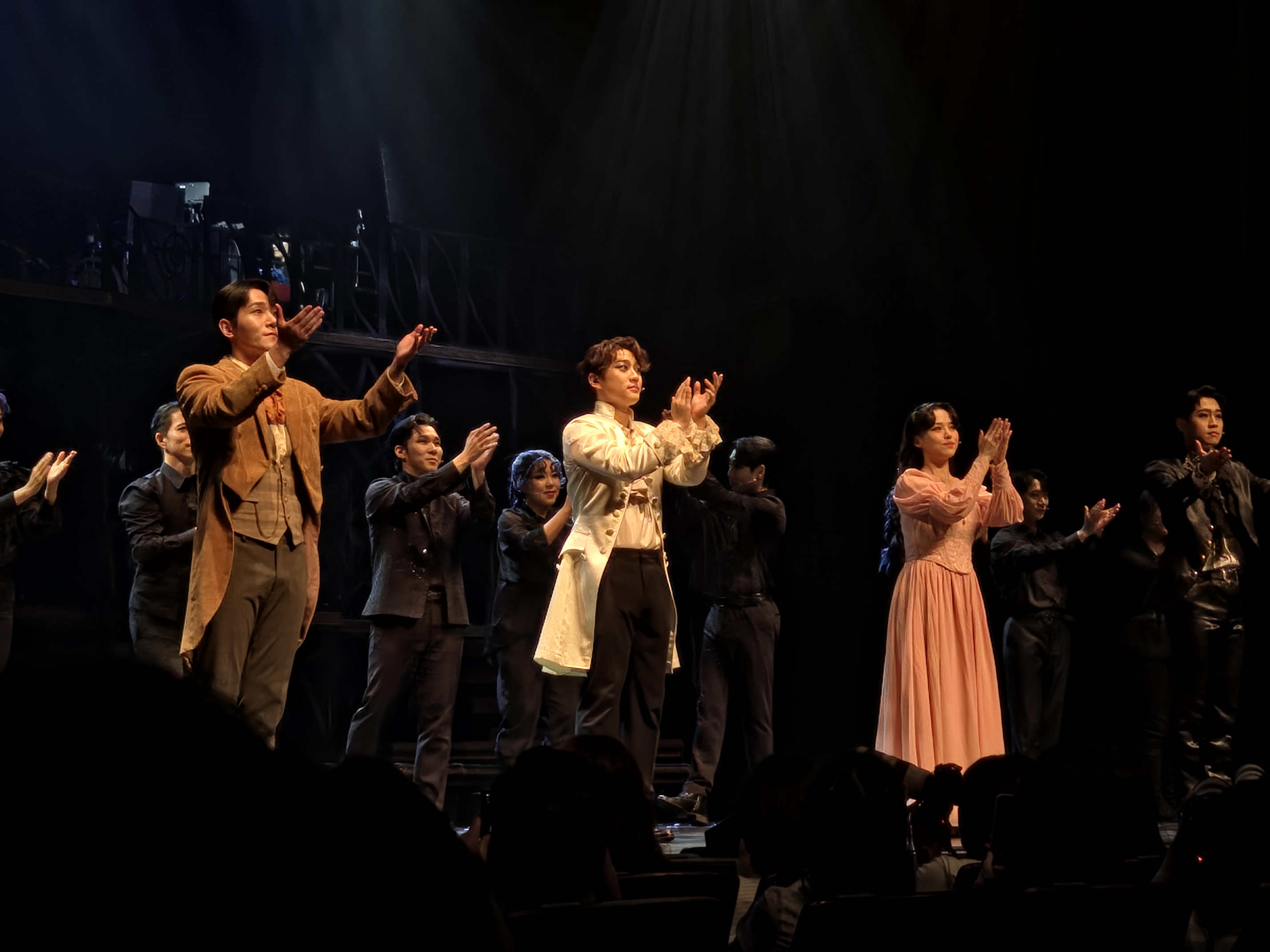
Hong Ju-chan, who takes on the role of Paganini this season, brings a brightness and freedom to the character that gives the production a fresh energy. Rather than foregrounding dark tragedy and madness, he naturally draws out the side of a pure artist who is simply, wholly absorbed in music for the love of it. Because his Paganini is portrayed as someone who quietly presses forward trusting in his own music rather than being buffeted by the world's gossip, the show's argument for Paganini as a human being becomes all the more convincing. His background as a working idol adds a particular resonance: it connects him, in a way that captivates audiences, to Paganini as the superstar who shook 19th-century Europe to its foundations.
Ultimately, the musical Paganini is not simply a narrative of clearing a man's name. It poses a weightier question to those of us sitting beyond the stage.
When human beings encounter a talent so immense it defies explanation, they tend not to explore it on its own terms — they construct a story around it to make it feel comprehensible. Sometimes that story becomes blind adoration; sometimes it becomes cruel hatred. We may never truly know what kind of person Paganini actually was. But the work painfully illuminates how a false frame can go on imprisoning a person's soul even after death — and asks whether it was not, in the end, we ourselves who built that frame. Because even two hundred years on, we are still calling him "the devil," still consuming his genius as gossip.
━━
The musical Paganini runs at the Main Hall of Hongik University Daehangno Art Center through August 30, 2026.