
The musical <Swing Days: Code Name A> was created with inspiration drawn from the "NAPKO Project" — a real covert operation carried out by the American OSS against Japan during World War II — and from the independence movement of Dr. Philip Jaisohn (Yoo Il-han). The work traces the transformation of an ordinary businessman who begins as a financial backer and ultimately risks his life on the front lines of the independence movement, depicting the pain of war, the ordinary people who suffer because of it, and the noble choices made to protect their ordinary lives.
At the outset, the protagonist Yoo Il-hyung (a character inspired by Dr. Yoo Il-han) says, "Why are you putting your life on the line like this? What difference does it make if one or two people like you step up?" The independence fighter "Veronica" fires back at him — and then, the moment she walks out the door, she is executed by Japanese soldiers lying in wait. From that point on, Veronica's ghost follows Il-hyung relentlessly. He tries in his own way to prove the answer he never gave her, but the story unfolds as he loses the things he holds dear, one by one.
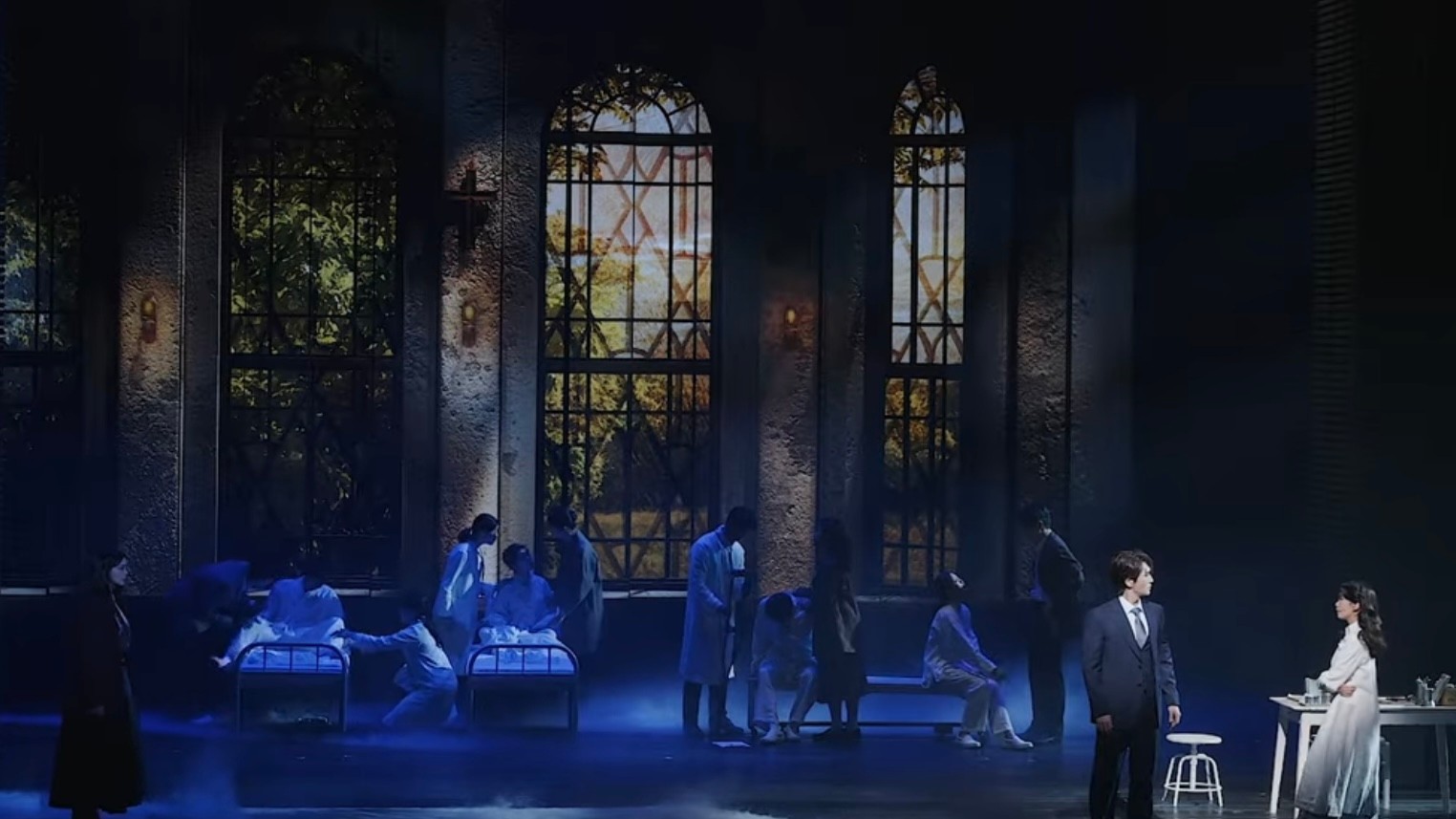
There is a duet number in the show called "So We Can Dream," sung by Veronica and Homeri (who plays Yoo Il-hyung's wife). Yasuo, a Japanese lieutenant colonel and an old neighborhood friend of Il-hyung, approaches him — Il-hyung was running a pharmaceutical company at the time — and asks him to provide medicine to help young boy soldiers on the front lines forget their pain, even if only briefly. As Il-hyung wrestles with whether this would mean aiding an enemy nation, Homeri, who is a doctor, brings up the boy soldiers, and the number begins.
She speaks of boy soldiers thrust into a war they never wanted, left without any support, drowning in unimaginable suffering where they can barely breathe — and says that even now, somewhere out there, they must be clinging to the crossroads between life and death, dreaming of home. She comes to support his decision: to make it possible for them to endure the agony of war, to bear a fear they never asked for.
The setting for this number is the pediatric clinic where Homeri works. People are lined up receiving treatment, resting peacefully on crutches or getting injections. Homeri begins to sing, and the moment the next verse arrives, Veronica's ghost emerges from the haze and all the lights shift to red. In that instant, the crutches become weapons and the syringes become blades. The peaceful clinic transforms in a flash into a battlefield where people fight and kill one another. When Dr. Homeri's part resumes, the scene returns to the clinic — and then, as soon as Veronica's turn comes again, it shifts back to the battlefield.
In the duet hip-chang section toward the end of the "So We Can Dream" number, Yoo Il-hyung steps into the red silhouettes and separates, one by one, the shadows locked in the act of killing each other. He lowers a crutch frozen mid-swing, and pulls apart fists flying toward each other. Through these actions, the scene implies his decision to stop the war and end the suffering of ordinary people.
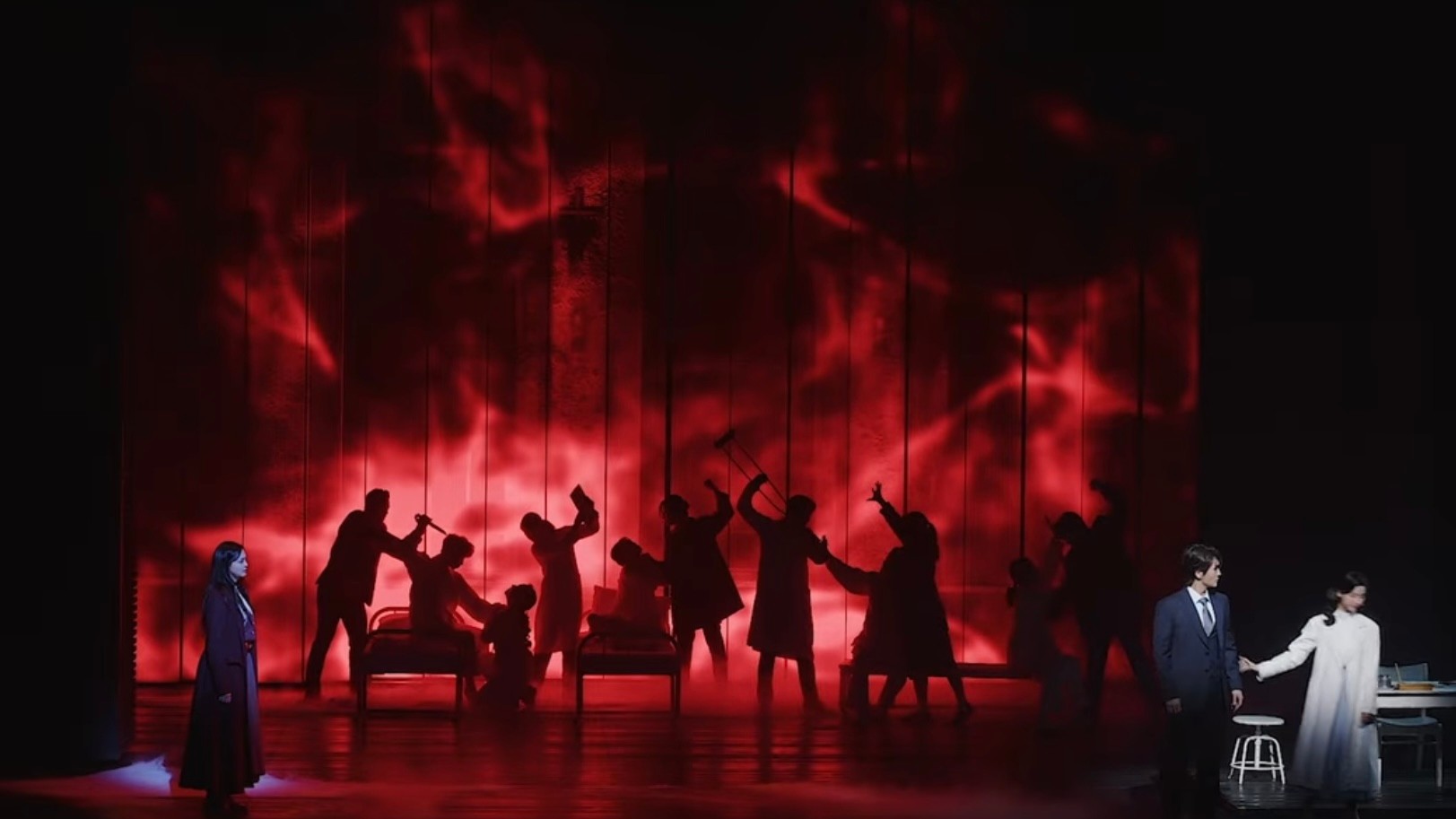
At this point, the frozen ensemble figures held within the red-lit silhouettes — timed to Veronica's lyrics — form a scene inspired by Picasso's masterwork <Guernica>.
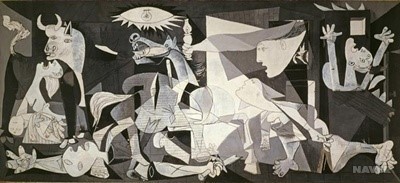
<Guernica> is a painting Picasso made after reading newspaper accounts of the atrocity that occurred on April 26, 1937, during the Spanish Civil War, when German forces bombed the town of Guernica with twenty-four aircraft. Depicting wounded, screaming figures, the painting is widely regarded as one of the most powerful portrayals of the horror and anguish of war — a connection that speaks directly to the message of the show.
The scene that immediately follows the number is a kamikaze sequence — the Japanese military's suicide bombing tactic — which deepens that connection further and foreshadows what is to come.
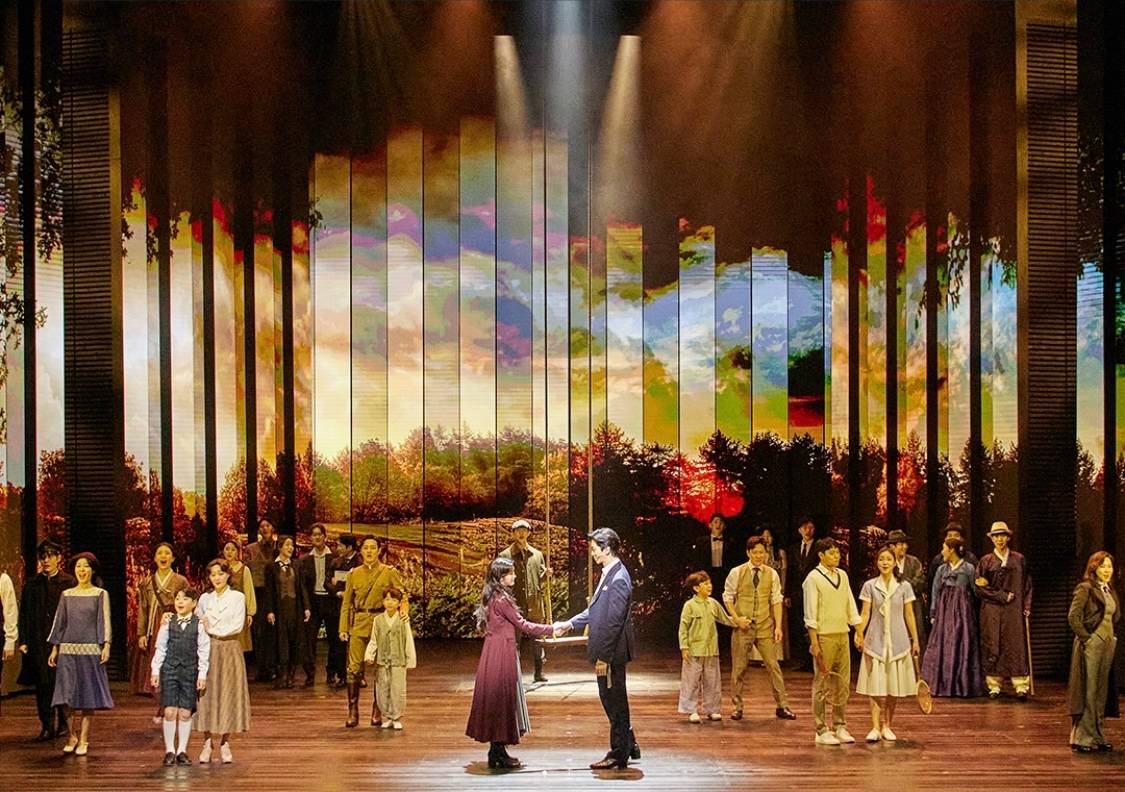
The independence activists of the NAPKO Project were recorded only by code names, and it was not until much later that their real names and stories were remembered. Ultimately, this production is about a beautiful choice — one that we must not forget.
The musical <Swing Days: Code Name A> runs through July 5 (Sunday) at the Chungmu Art Center Main Hall. Alongside its dazzling visual effects, the show rewards close attention — we encourage you to watch with an eye for the hidden inspirations woven into each scene.
Production photos: company yeonjak
