
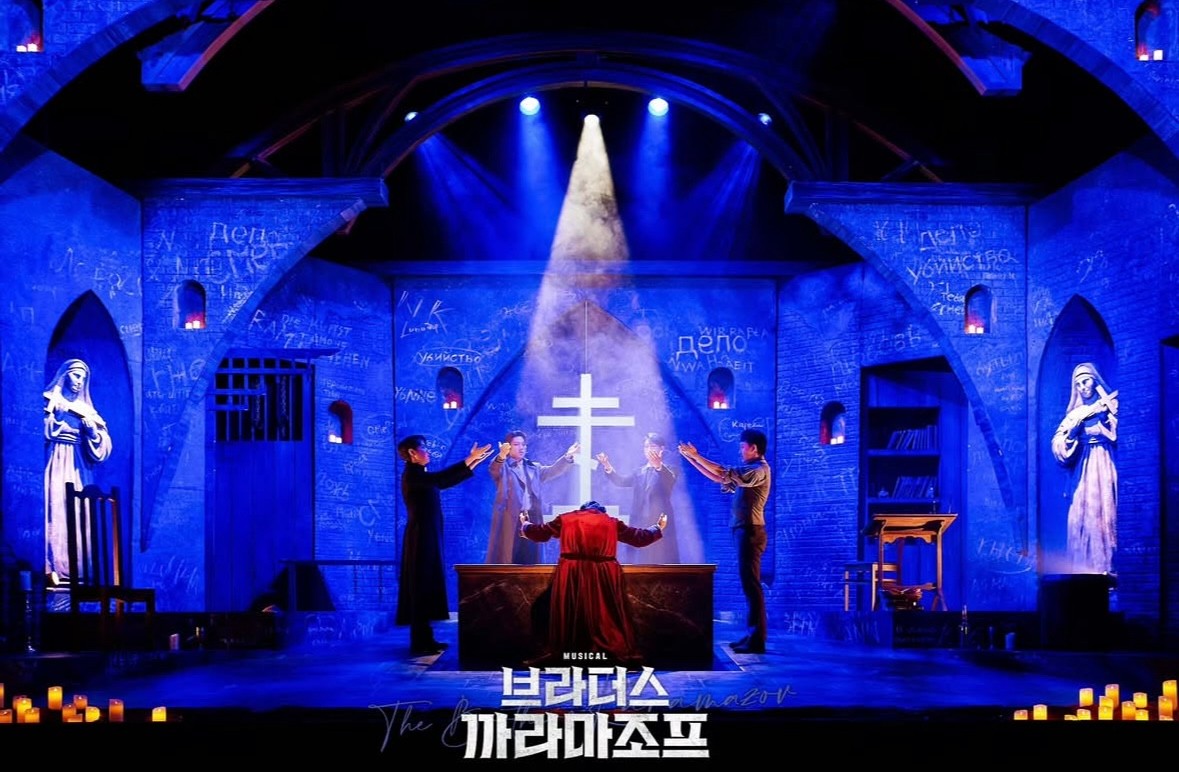
Last weekend, I attended the musical <Brothers Karamazov> in Daehangno. Given that the work is based on The Brothers Karamazov, the masterpiece by towering Russian literary figure Dostoevsky, my expectations were high even before I walked in — and the stage I encountered far exceeded a simple adaptation of the source material, confronting the audience head-on with philosophical questions about human existence. After the performance, eager to understand the work more deeply, I sought out the "Creator's Notes" series uploaded to the production company's official Instagram account. The creative team interpreted each character not merely as a figure in a narrative, but as an archetype of humanity — or a symbol of the essential desires and convictions that make us human. Of particular interest was their analysis of Fyodor, Dmitri, Ivan, Alyosha, and Smerdyakov through the respective lenses of desire and emotion, reason, faith, and action and responsibility — a perspective that made me see the entire work anew.
In this review, I will draw on both my experience of the live performance and the creator's notes released by the production company to offer an in-depth analysis of each character, while also examining the significance of the original novel The Brothers Karamazov alongside the musical's own distinctive interpretation.
The Origin of Every Tragedy: Fyodor Karamazov
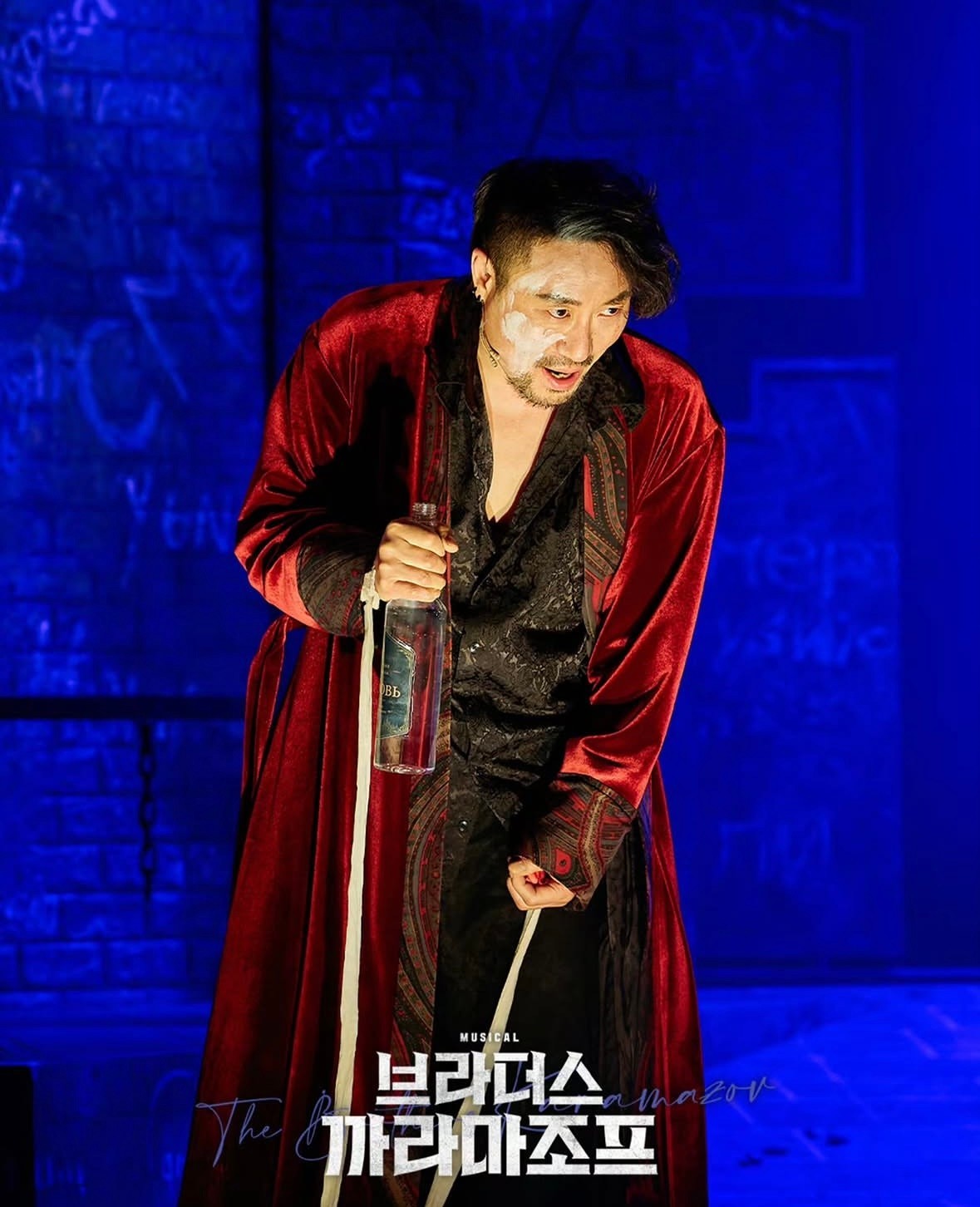
Fyodor is the first to die in the story, yet he is a presence that never truly disappears.
He is both the victim of a murder and the cause of every tragedy that follows.
According to the creator's notes, he is not simply a "dead father" — he is closer to a condition that runs through the entire story.
He does not even experience love as an emotion. For him, love is not a relationship but a momentary impulse, something to be consumed.
Above all, what he is fixated on is not love but life itself. His determination to survive to the very end, to go on feeling and sensing to the last, amounts to an instinctive refusal of death.
Yet he takes no responsibility for his own life. That void of accountability is ultimately passed on to his sons.
Fyodor, then, is not simply a villain — he is the condition that shows how far a human being can fall, and the starting point from which the next generation's tragedy is born.
A Man ofDesire: Dmitri Karamazov
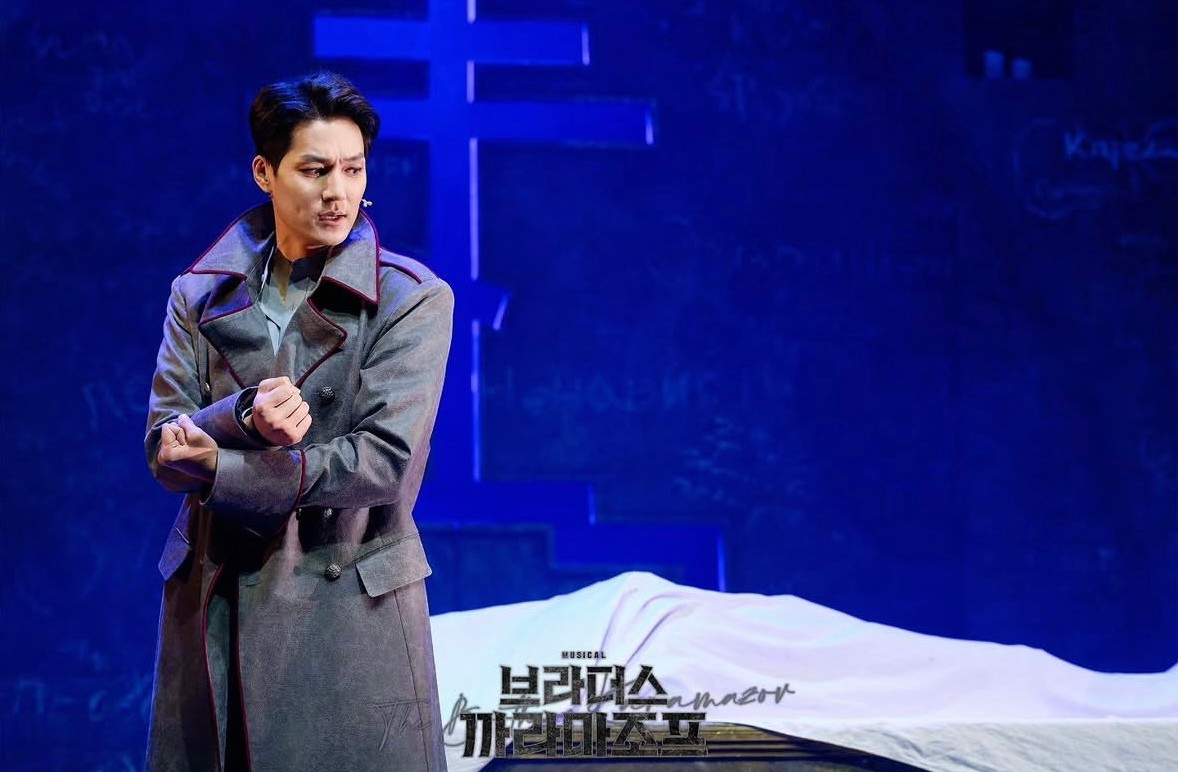
The eldest son, Dmitri, is the most passionate and viscerally human figure in the work. He cannot conceal his emotions. When he loves, he becomes obsessive; when he rages, he explodes; when he is jealous, he destroys.
His hunger for money, love, and recognition always translates directly into action, and his desires exist in a state of perpetual excess. It is precisely this that makes him the prime suspect in his father's murder.
Yet Dmitri does not deny his desires. On the contrary, he knows exactly what kind of man he is. His tragedy lies not in desire itself, but in his belief that desire is the only way he can prove his own existence.
He longs for love, and yet it is he himself who ultimately destroys it.
He is the loudest presence in the story, and yet he carries the deepest loneliness. Dmitri — in whom lack and desire, love and destruction coexist — embodies the most primal face of humanity.
A Man Who Collapses at theEdge of Reason: Ivan Karamazov

Ivan is the most rational character, and yet the most dangerous. He questions rather than acts. He relentlessly doubts the existence of God, the nature of justice, and the freedom of humanity, dismantling everything through the force of logic.
His defining idea is encapsulated in the statement "everything is permitted." This is not simply a declaration of atheism — it is an experiment in whether human beings can live by their own standards alone.
The problem is that this idea does not remain contained within him. Ivan's questions become the justification for another person's actions, and ultimately make tragedy possible. He never raised a knife himself, yet he cannot fully extricate himself from the center of events.
Through Ivan, the work shows how far thought alone can drive a person. He perceives evil more clearly than anyone, yet that perception does not save him. Instead, he becomes trapped inside his own logic and collapses under its weight.
A Man WhoChooses Faith: Alyosha Karamazov
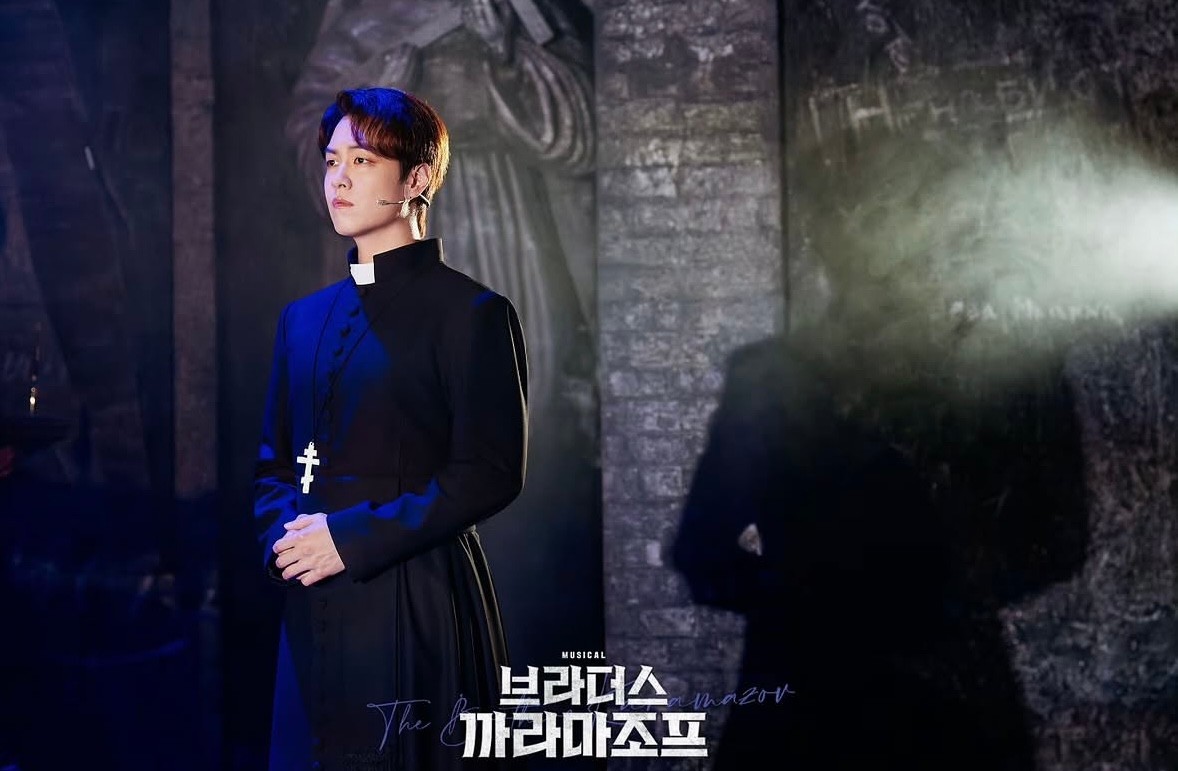
Alyosha is the quietest figure in the work, yet the one who carries its most important question. He believes in God, he believes in people, and he believes in love.
But his faith is not an unshakeable certainty. It is closer to a choice — one made by someone who doubts constantly, who is wounded again and again, and yet refuses to give up in the end. That is why Alyosha's defining quality is not strength, but vulnerability.
When his brothers are swept away and broken by desire and ideology, Alyosha offers a different kind of humanity. He cannot save the world, and he cannot prevent the tragedy. But he chooses, to the very end, to remain human.
Through Alyosha, the work suggests that salvation may not be a grand miracle, but rather the act of refusing to lose faith in others — even in a world that has already fallen apart.
The Deciderin Silence: Smerdyakov
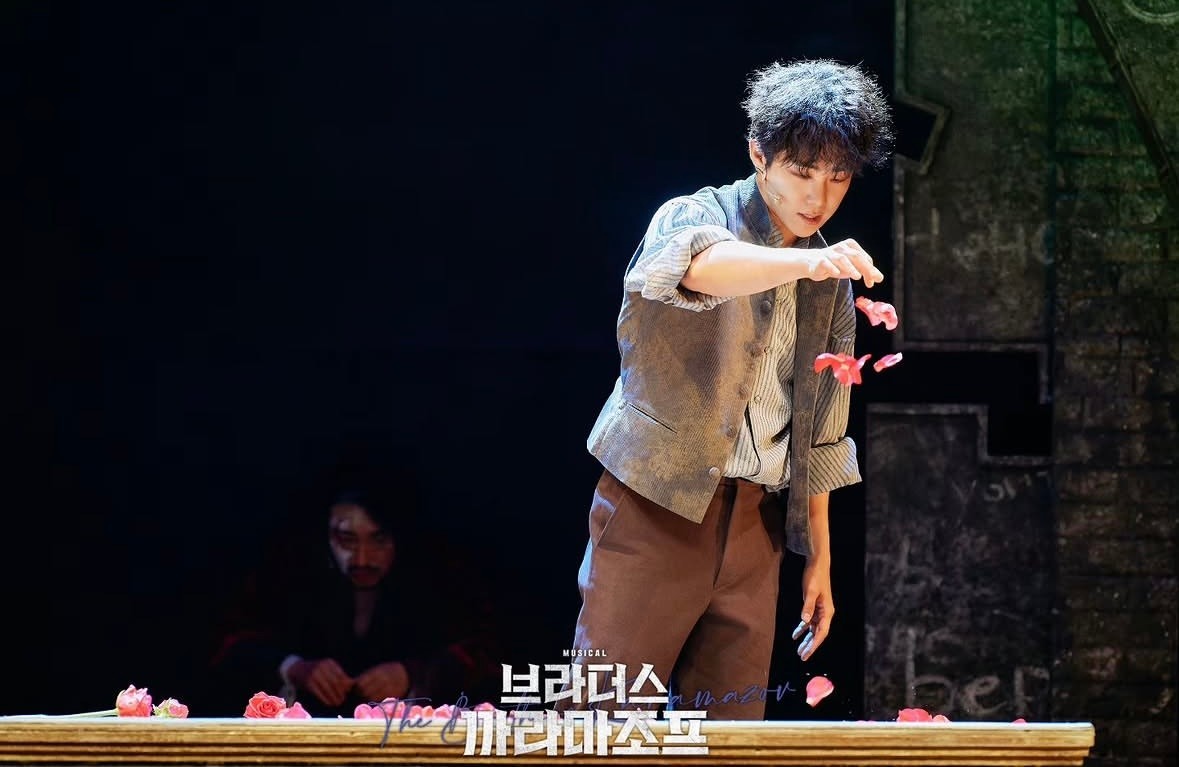
Smerdyakov is the quietest figure in the work, yet the most decisive. He lingers always at the margins, listening to what people say and committing it to memory.
On the surface he appears to follow the will of others, but in reality he is someone who executes his own judgments with a coldness that surpasses everyone around him. He has weaknesses — his fits and his apparent helplessness — but he turns these into tools for concealing himself.
Most significantly, Smerdyakov is the one who translates Ivan's ideas into reality. By acting directly, he embodies the moment when thought becomes deed. This is what makes him the most contradictory figure in the story.
He was shaped by the influence of others, but the choice was ultimately his own — and at the final moment, he ends his life by his own will. Through Smerdyakov, the work shows that responsibility does not rest solely with the person who acted, but also with the environment and the ideas that made that action possible.
The OriginalNovel The Brothers Karamazov and the Meaning of the Musical
The Brothers Karamazov is the final novel left to us byFyodor Dostoevsky,one of Russia's greatest literary giants.
The story unfolds around a father's murder, but its true core is not the search for a culprit.
Through four characters, Dostoevsky gave form to different facets of human existence.
Fyodor represents desire, Dmitri emotion, Ivan reason, Alyosha faith, and Smerdyakov the shadow that falls across all of them — and the question of responsibility.
The musical <Brothers Karamazov> effectively compresses this philosophical architecture onto the stage.
In particular, it reinterprets each character as an embodiment of a distinct idea or emotion, while never losing sight of their very human deficiencies.
As a result, even audiences unfamiliar with the original novel can naturally follow the questions the work poses, simply by tracing the collisions between its characters.
Overall Impression
<Brothers Karamazov> is neither a mystery centered on a murder case nor a family drama about conflict between relatives.
This work is closer to a philosophical drama — one that probes what human beings live for, and what causes them to break.
Dmitri, driven by desire; Ivan, collapsing at the limits of reason; Alyosha, clinging to his humanity to the very end; and Smerdyakov, whose actions lay bare the question of responsibility.
Each of them is a different face that exists within us all.
In the end, the question that lingers with the audience after the curtain falls is not who committed the murder.
It is: what must a person believe in to go on living — and is it possible to remain human even after everything has fallen apart?
<Brothers Karamazov> is a work that leaves those questions, to the very last, in the hands of its audience.
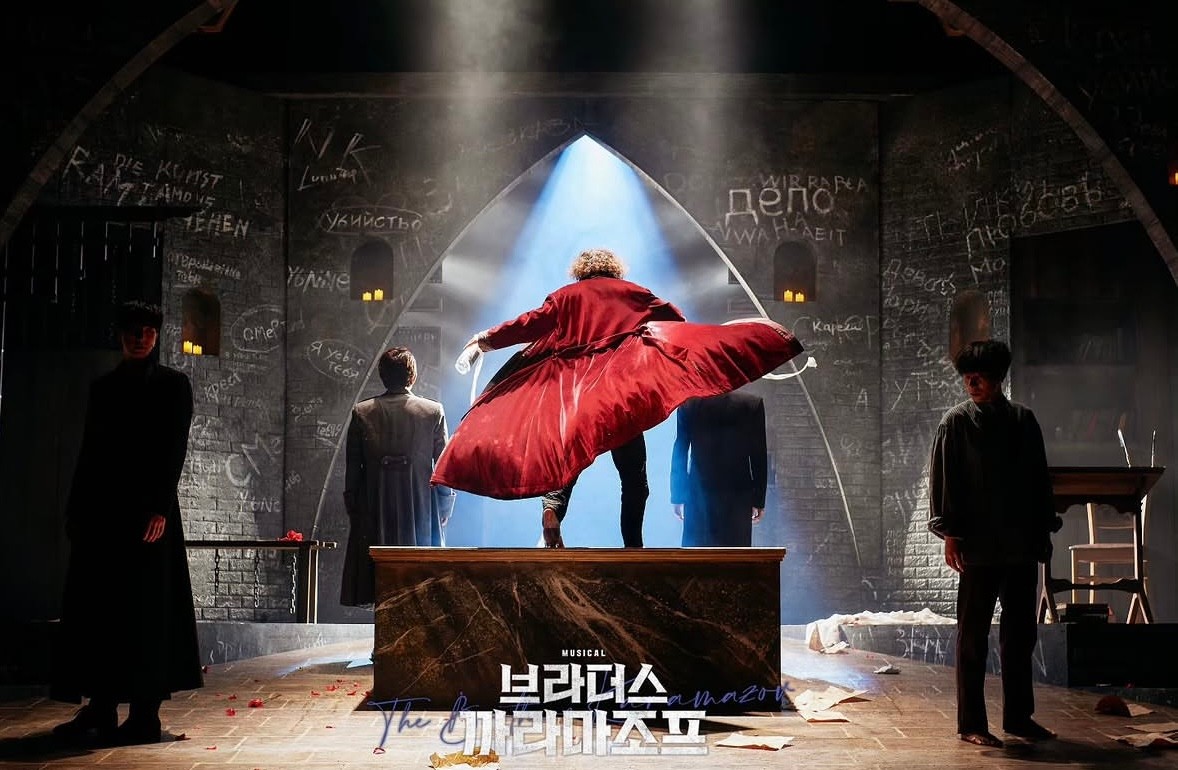
Production photos: Orchard Musical Company
