

Confronting the Anxieties of Our Time Through a Classic
Written by a seventeen-year-old Friedrich Schiller while confined in an oppressive military academy, Die Räuber (The Robbers) remains a landmark of Germany’s Sturm und Drang movement. Its 1782 Mannheim premiere caused a sensation, addressing patricide, youth revolt, and radical violence so intensely that audience members reportedly wept and fainted. More than two centuries later, the incendiary text returns to the stage as the final premiere of the season at Schauspielhaus Bochum.
Directed by Lucia Bihler, this modernized interpretation directly confronts our current cultural anxieties. In a contemporary society where far-right movements agitate for systemic upheaval and patriarchy continues to reinvent itself, Bihler asks us to re-examine Schiller's central tension: should we celebrate the rebellion of these young men, or be deeply fearful of it?
The Tragedy of Two Brothers
At the heart of the play lies the bitter rivalry between Count Moor's sons, Karl and Franz. Karl, the idealistic elder brother, writes home from university seeking forgiveness for his dissolute lifestyle. However, the resentful younger brother, Franz, forges correspondence to convince their father that Karl is beyond redemption. Franz manipulates the Count into disowning Karl, imprisons his father to starve him, and attempts to force himself on Karl’s fiancée, Amalia. Believing he has been abandoned, a despairing Karl forms a band of robbers with fellow disillusioned youths. What begins as a romanticized rebellion against corrupt authorities quickly devolves into indiscriminate slaughter. When Karl finally returns home and uncovers the truth, Franz kills himself out of fear. Yet Karl, bound by a blood oath to his bandit gang, cannot return to normal life. At Amalia’s own pleading, he kills her before surrendering to the law, realizing the futility of his violent rebellion.
Creative Synergy: An Avant-Garde Mise-en-scène
The success of this production in translating Schiller's narrative into a contemporary and radically theatrical language owes much to the seamless collaboration of the creative team led by director Lucia Bihler. The aspect Bihler appears most determined to avoid is the romanticization of the robbers. Rather than presenting an adventurous tale of heroic outlaws, she places the structures of power that destroy human relationships—and the phenomenon of toxic masculinity—under a magnifying glass.
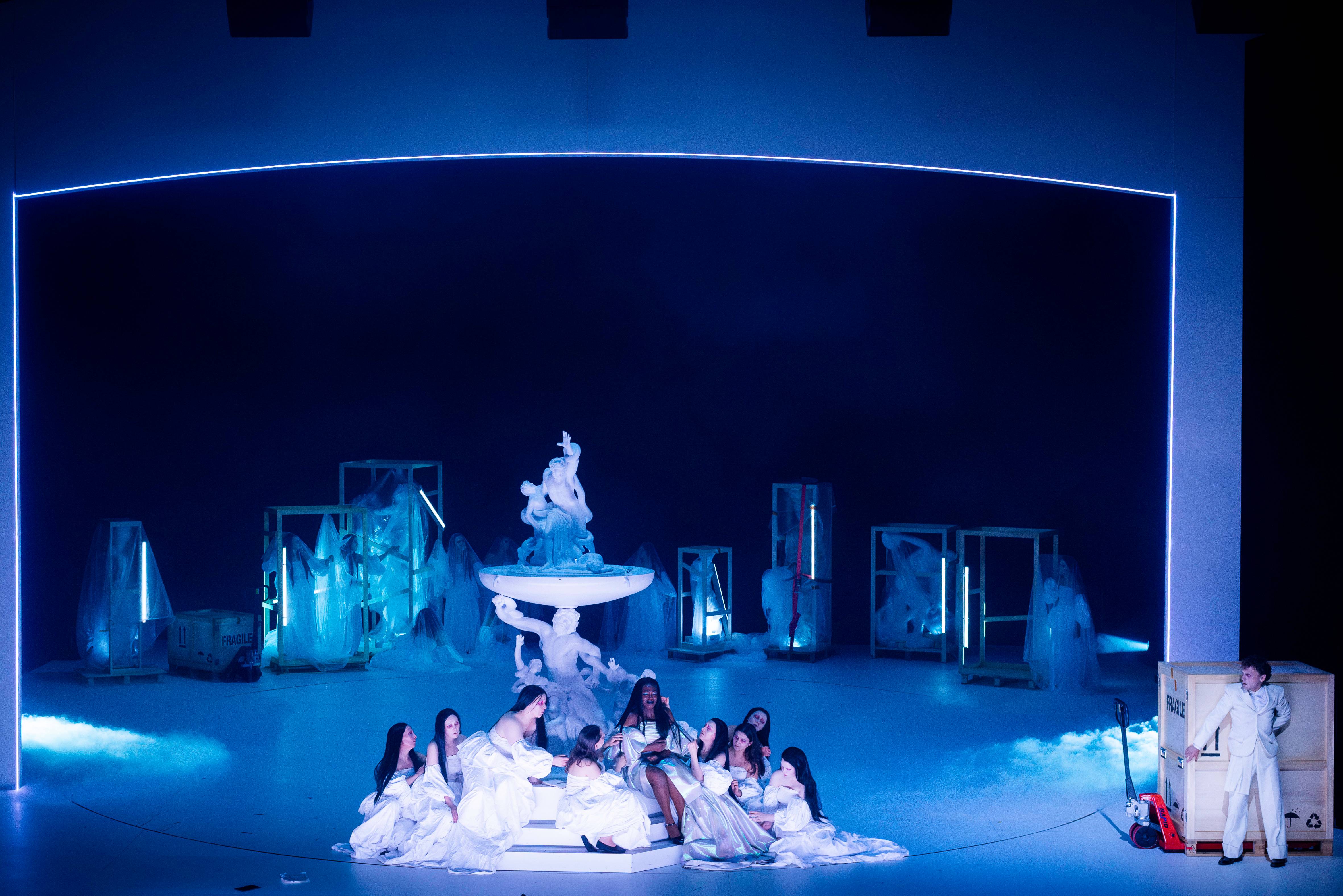
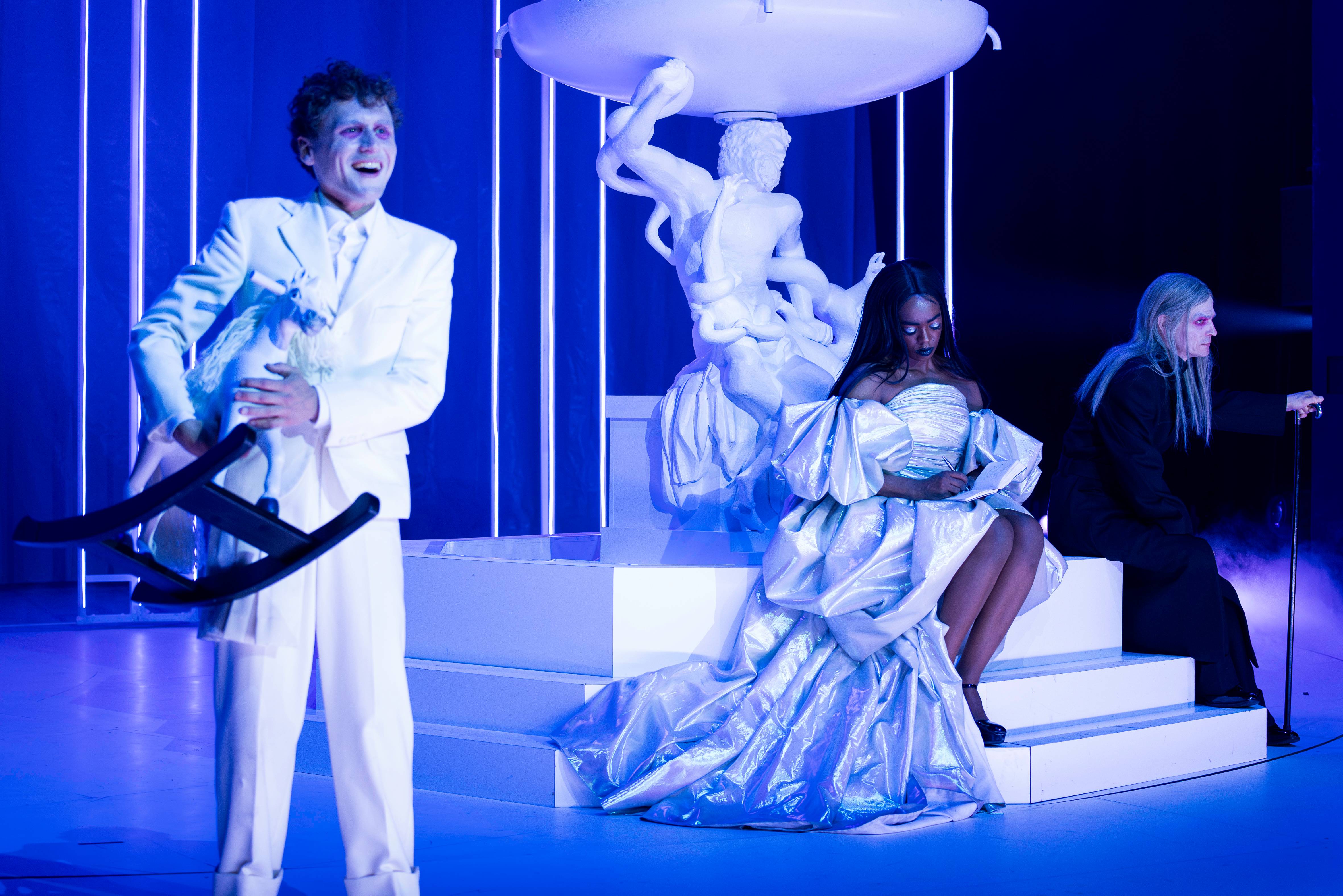
This directorial vision is realized with striking clarity in the set designed by Paula Wellmann. Gone are the realistic castle interiors and romantic forests traditionally associated with the play. Instead, the stage becomes a world perpetually “under construction,” littered with wrapped statues, architectural fragments, and skeletal scaffolding. To the audience, the space resembles a post-apocalyptic landscape—or perhaps a surreal “Fourth World” detached from reality itself. It suggests that the brothers' rebellion does not create a new social order but merely reproduces old forms of oppression. Particularly effective is the fountain centered around the Laocoön sculpture, symbolizing a powerless father unable to save his children from serpents and visually encapsulating the collapse of the Moor family.
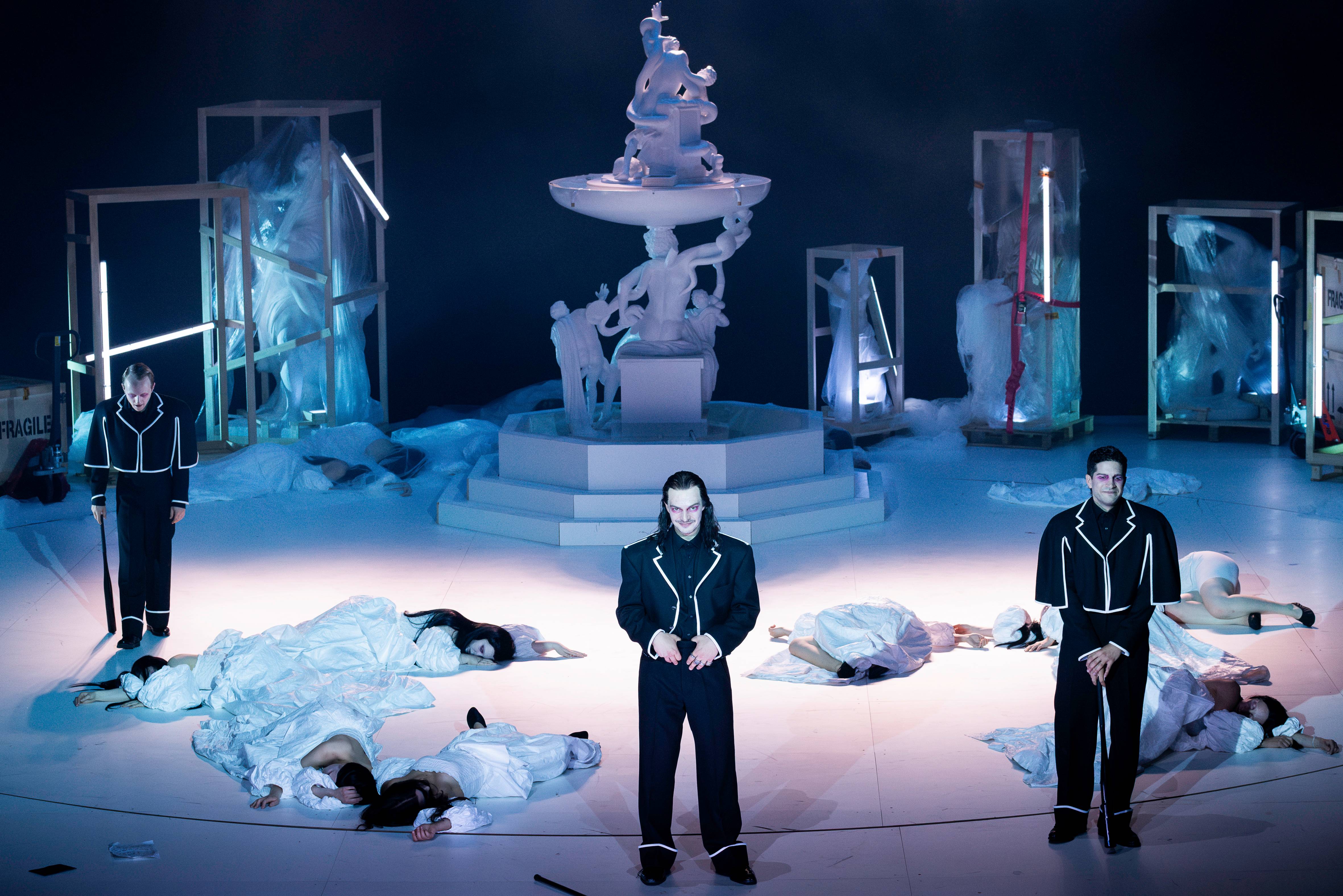
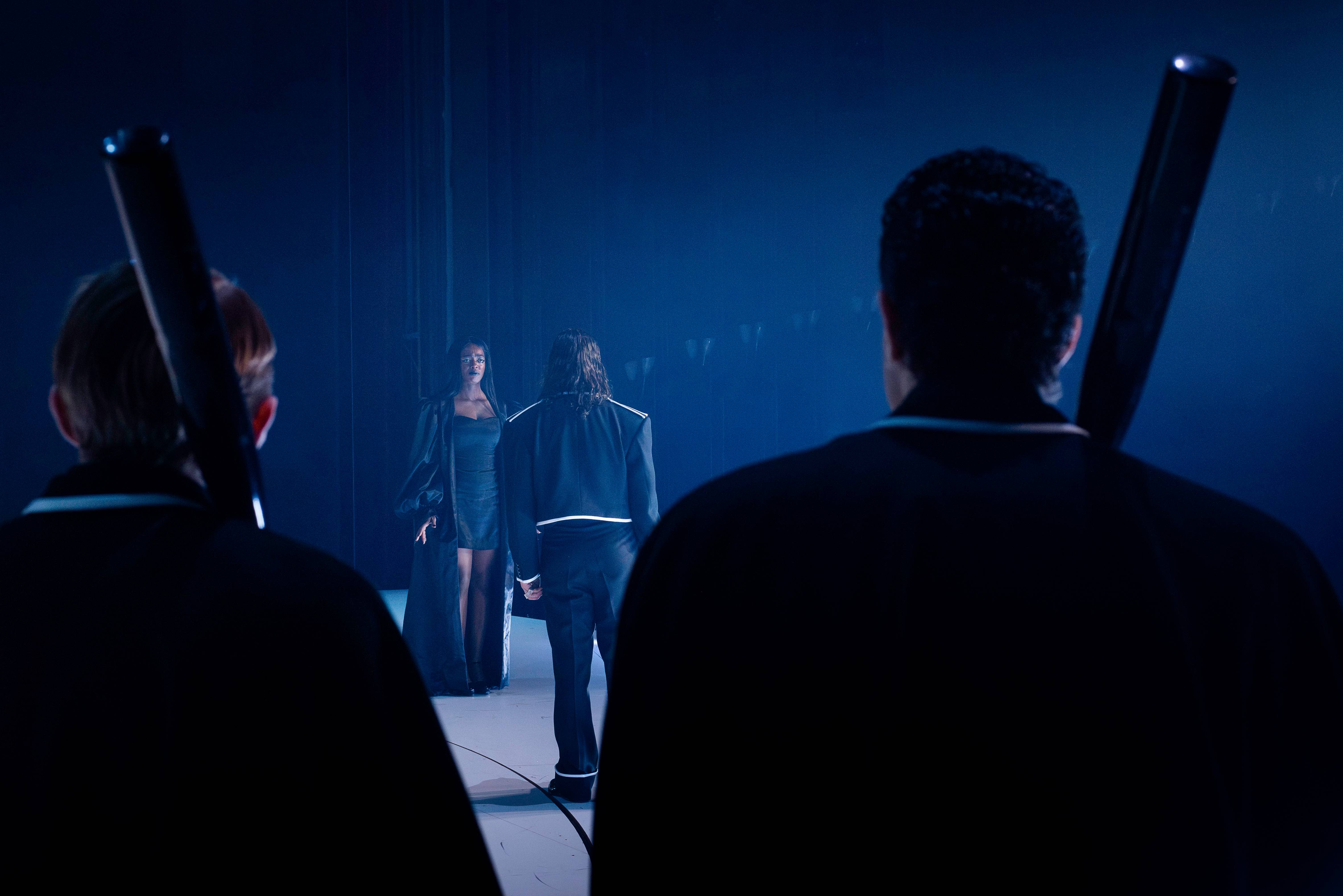
Leonie Falke’s costumes and Jacob Suske’s music further expose the naked reality of the toxic masculinity underlying the robbers’ violence. Stripped of romantic idealism, the gang appears in suits reminiscent of 1950s film noir and gangster cinema, while moments of violent fantasy reveal them in plain white undershirts. The visual symbolism tears away the façade of noble banditry and lays bare a culture of blind male solidarity and aggression. The accompanying soundtrack of dissonant doom jazz reinforces this perspective. The violence is neither cool nor stylish; it is heavy, oppressive, and horrifying. Karl and Franz are contrasted like black and white chess pieces, and the atmosphere becomes particularly chilling whenever Wagner’s Rienzi overture—famously admired by Hitler—echoes through Franz’s mind as an expression of his obsessive desire for control and his crippling inferiority complex.
Physicality and Presence: The Power of the Ensemble
What brings life and blood to this conceptual production is the remarkable physicality of the Schauspielhaus Bochum ensemble. Most notable is Dominik Dos-Reis as Franz. Through precise physical performance, he crafts a multidimensional portrait of a man driven to madness by his inferiority complex. Particularly memorable are the moments when Franz breaks the fourth wall and directly confides his inner thoughts and twisted justifications to the audience. Within the suffocating atmosphere of a classical tragedy that could easily become relentlessly heavy, these moments of secret communication and dark humor act as a welcome release valve. Franz’s sly engagement with the audience briefly lightens the tension while simultaneously making his character all the more unsettling.
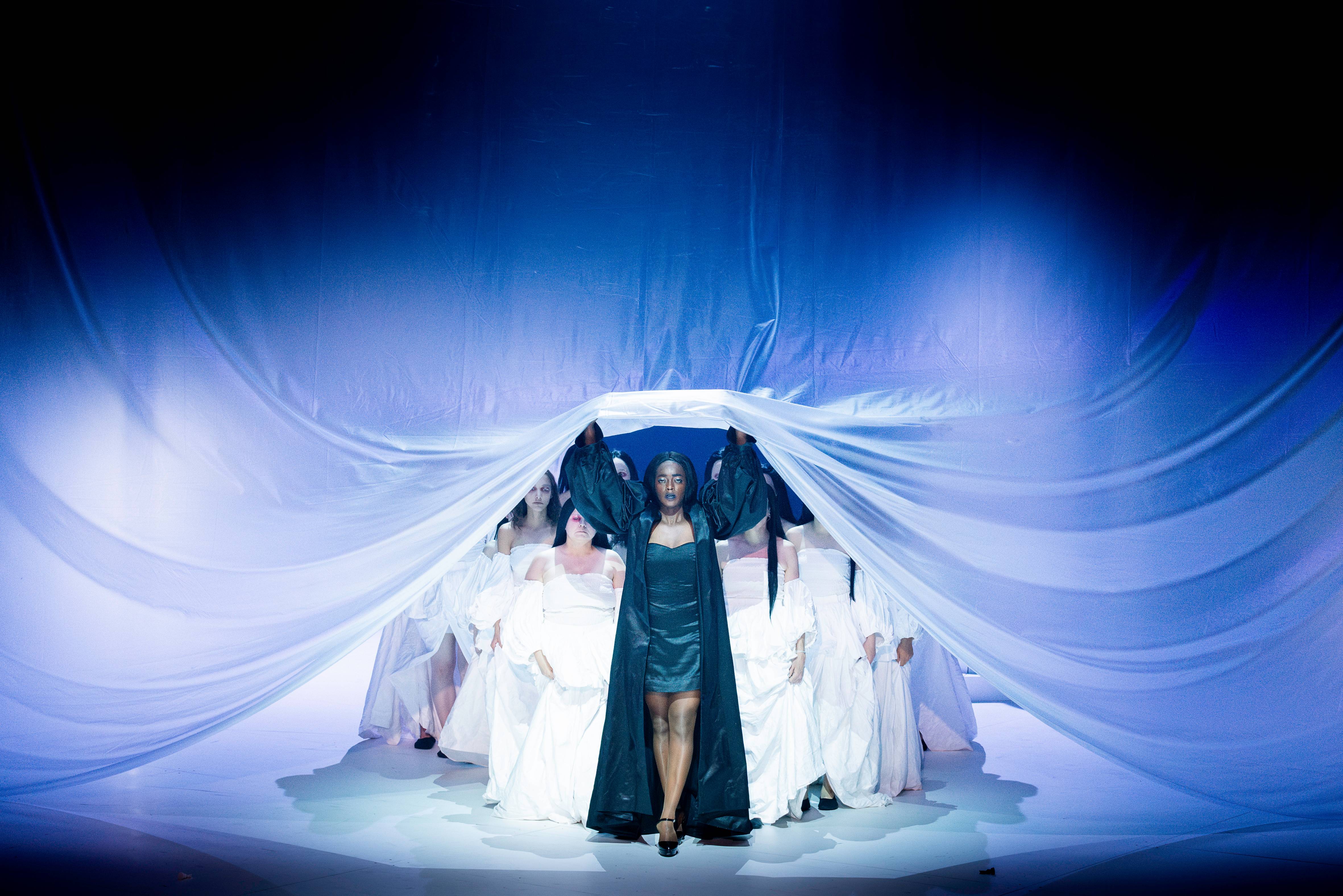
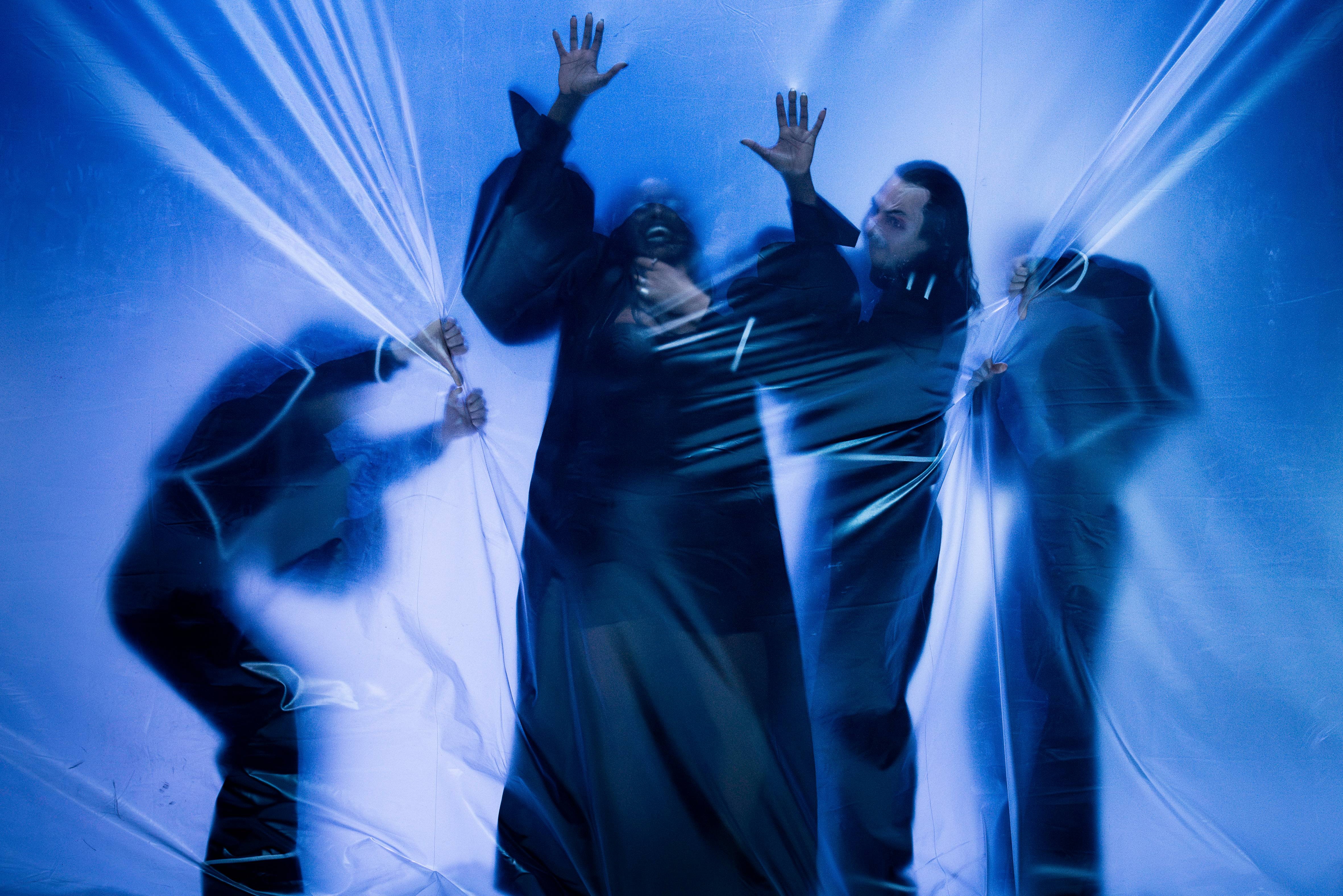
Alexander Wertmann, as Karl, anchors the production with explosive energy, embodying the transformation from idealistic hero to destructive gang leader. Meanwhile, Stacyian Jackson’s Amalia—appearing in a monumental costume resembling an oversized wedding dress—struggles with determination to represent a force of solidarity opposing male violence, her commanding voice and presence lending considerable weight to the role.
Trapped in the Text: Radical Staging vs. Narrative Reality
Bihler saves her most daring subversion for the finale. In Schiller's original tragedy, Amalia begs Karl to kill her, sealing a romanticized sacrifice before he turns himself in. The Bochum adaptation aggressively dismantles this femicide trope. Backed by a powerful, thunderous female chorus, Amalia rejects passivity, weaponizes her collective rage, and exacts revenge against her patriarchal oppressors. However, this striking reinterpretation exposes a deep narrative rift. Throughout the play, Karl and Franz operate with clear, active goals, while Amalia remains trapped in a static cycle of domestic devotion and sorrow. The spectacular vengeance of the final scene cannot mask the fact that her storyline is defined by passive waiting. To truly upend the text's inherent misogyny, the production needed to redefine Amalia's purpose from the very beginning. Instead, by attempting to graft an empowered ending onto an unearned character arc, the production exposes its greatest flaw: it never quite transcends the limitations of the classic it seeks to critique.
Questioning the Conditions of Freedom and the Meaning of Violence
While the production falters in fully emancipating its heroine, Schauspielhaus Bochum’s Die Räuber remains a powerful reinterpretation of the piece. Built upon sharp, calculated mise-en-scène and powerhouse performances, this interpretation achieves something vital: it strips political rebellion of its romantic mythology. By exposing the brutal, unvarnished face of ideological violence, the production forces its audience to confront uncomfortable, enduring dilemmas.
Can violence truly be justified when carried out in the name of resisting systemic injustice?
More urgently, can bloodshed ever be considered a valid solution, regardless of how noble the cause?
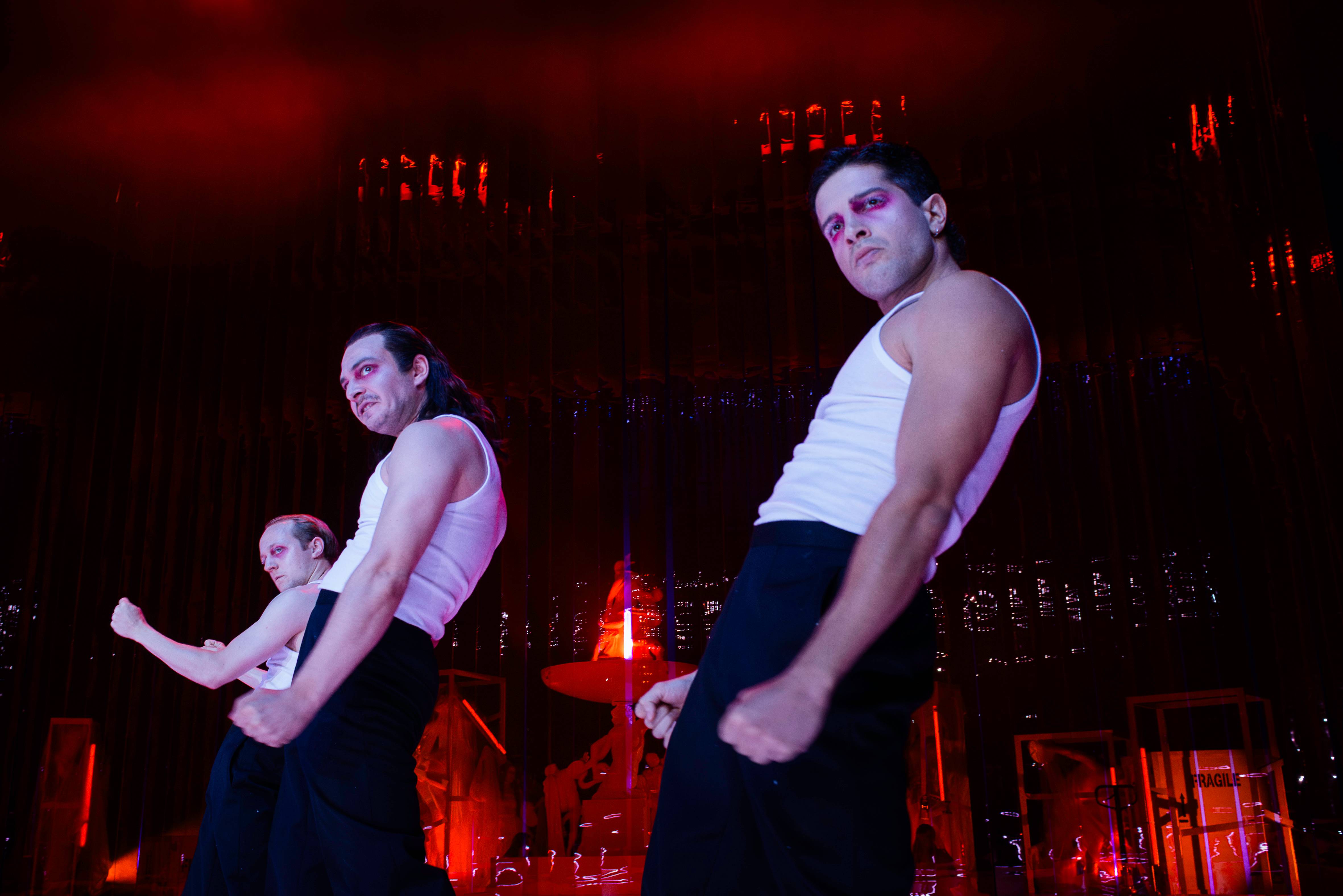
Lucia Bihler presents violence in its most unvarnished form, refusing any adventurous or heroic romanticization and instead forcing the audience to confront its horror directly. The visualization of violence on stage ultimately conveys a bleak insight: violence can neither dismantle old orders nor create a new world. It merely generates further oppression and harm.
Perhaps this is the most unsettling and urgent message that Schiller’s eighteenth-century classic Die Räuber continues to deliver more than two hundred years after its creation—a message directed toward our own age, one increasingly marked by extremism and populism.
production photos ⓒJörg Brüggemann
