

If you’ve ever been to a European opera house, you may have noticed a protruding black box at the very front center of the stage, facing away from the audience. This structure can seem to clash with the stage design, instantly drawing your attention. What is its purpose? In contrast, this “black box” is difficult to spot in major Korean venues such as the Seoul Arts Center Opera House or the Daegu Opera House.
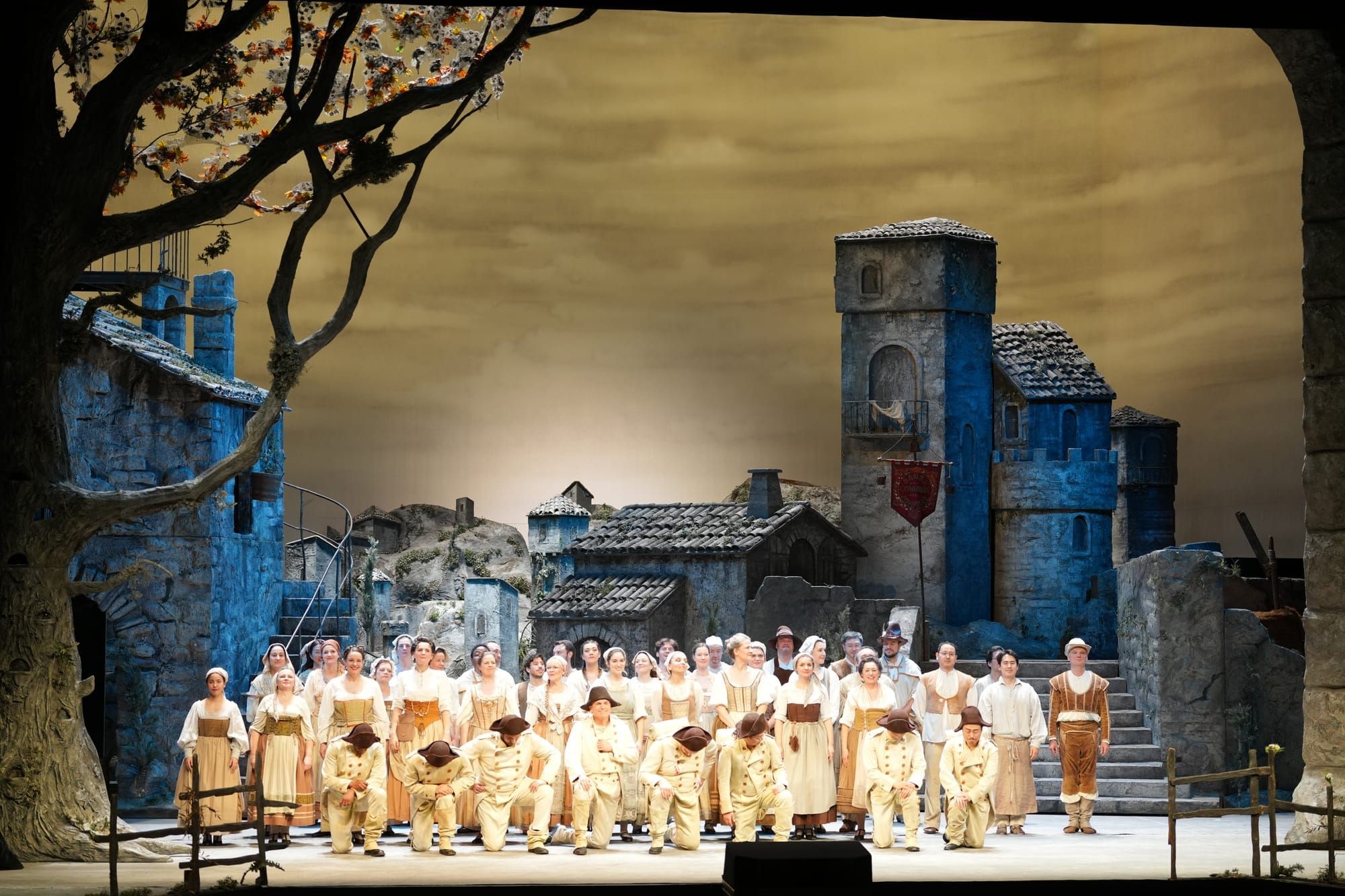
Staatsoper Hamburg © Wolfgang Radtke
: A black box that does not match the set is visible on a stage replicating an early 1800s Italian village.
This box is called Souffleurkasten in German, buca del suggeritore in Italian, and prompter’s box in English. It is the space where the prompter sits, quietly feeding lyrics and timing cues to performers on stage. Interestingly, the terminology used in each language reveals not only how this role was historically understood, but also how different cultures have viewed the art of opera.
The German word Souffleur comes from French, meaning “the one who breathes.” It evokes the image of a hidden presence that, when a performer forgets their lines, gently “breathes” them back to life with a whisper. The English word prompter comes from “prompt,” meaning “to stimulate or cause to act.” This highlights the role of a guide who intervenes at moments of hesitation, indicating precise timing and triggering the next action. Meanwhile, the Italian suggeritore stems from a word meaning “to advise.” Combined with buca (pit or hole), it literally describes someone who offers discreet guidance from a hidden space beneath the stage.
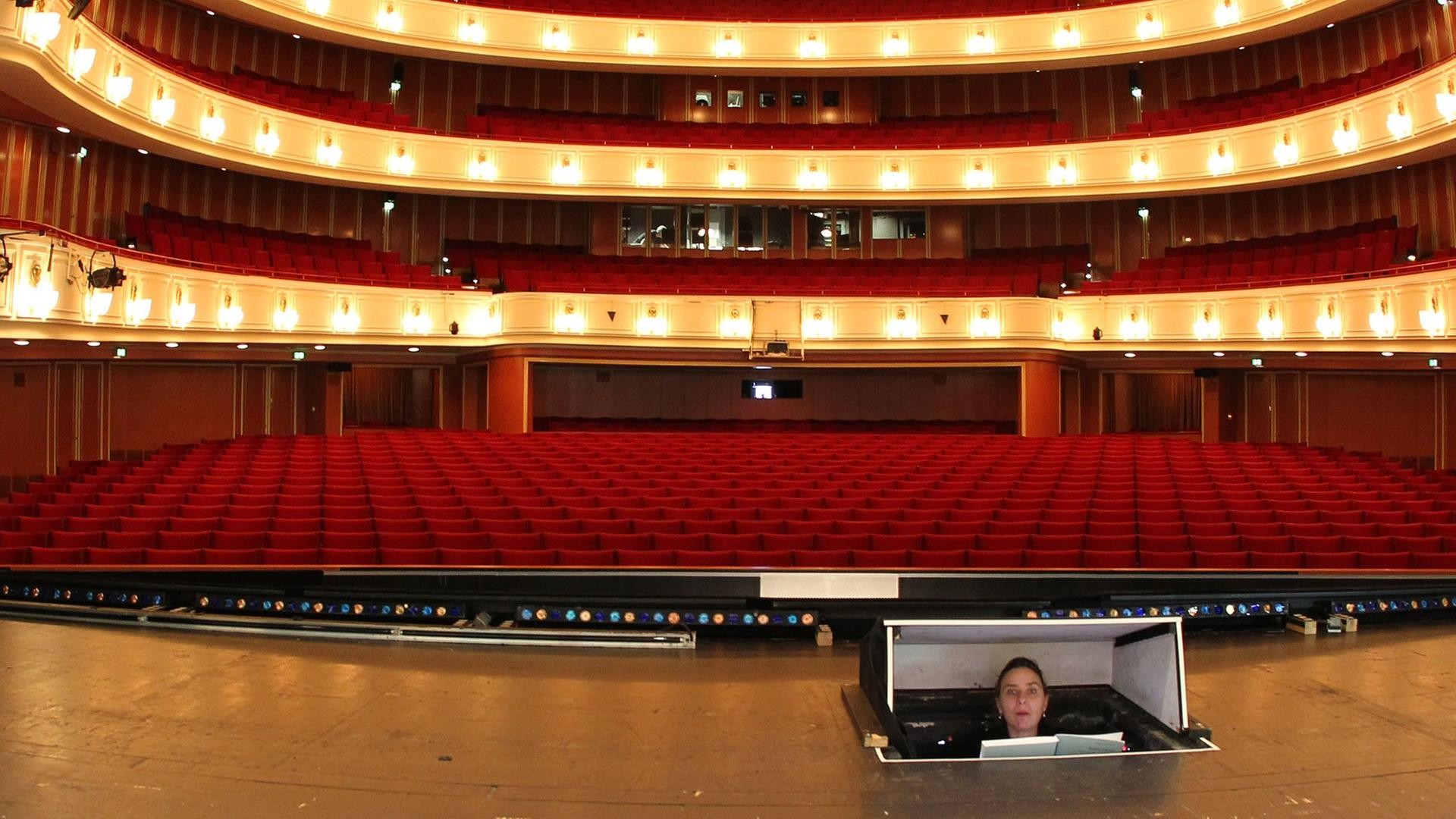
Deutsche Oper am Rhein © Roland Weihrauch
: This is what the view from the stage looks like!
As these names suggest, the prompter is not merely an assistant but a vital presence that sustains the flow of an entire performance. Opera is an extraordinarily complex art form, intricately weaving together orchestral performance, precise timing, and lyrics in foreign languages. On stage, singers often struggle to see the conductor clearly, or they may fail to hear fellow performers due to the vast acoustic space. This is especially true in large choral scenes, where even the slightest timing error can disrupt the entire performance. For this reason, many international opera houses employ resident prompters who provide real-time cues and lyrics directly from the edge of the stage.
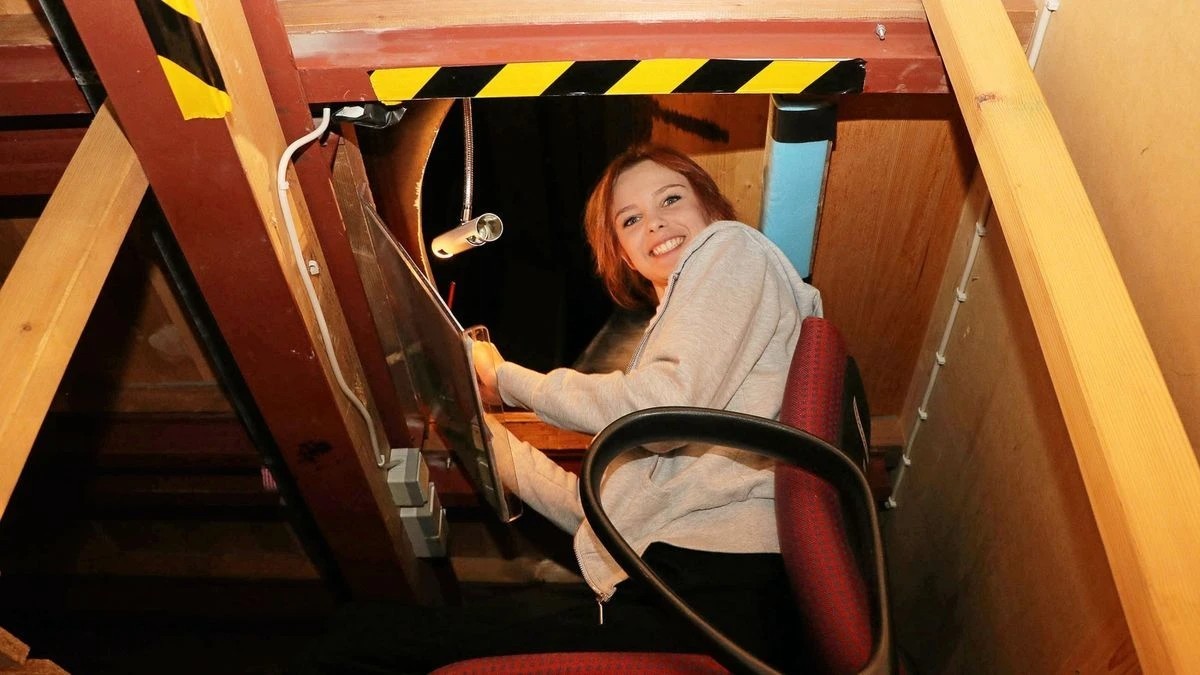
Niederdeutsche Volksbühne © Timo Jann
: Inside that small box is a functional workspace designed for a person.
The prompter enters from beneath the stage through the orchestra pit and ascends until only their face is visible.
Equipped with score lights and monitors showing the conductor, the prompter follows the live performance closely and continuously provides singers with lyrics and timing cues.
However, this “black box” is rarely seen on Korean stages, largely due to differences in operational systems and production structures.
First, many European opera houses operate under a repertory system, cycling through multiple productions with a resident company of singers and chorus members. In this system, different operas are performed on consecutive nights. For example, La Bohème one evening, Carmen the next, and La Bohème again shortly after. Under such demanding schedules, prompters play a critical role in maintaining performance stability.
In contrast, Korea primarily relies on curated productions, in which a company focuses intensively on a single production over a set period, resulting in relatively short runs. Because performers undergo extensive rehearsal beforehand, on-stage confusion is minimized, making a prompter less essential.
Second, workforce structure is another key factor. A prompter is a highly skilled professional who must not only follow the music and conductor but also understand multiple foreign languages. In Korea, however, limited budgets and smaller production scales make it difficult to employ such specialized staff full-time. Instead, vocal coaches or assistant conductors often share these responsibilities from the rehearsal stage through to the live performance.
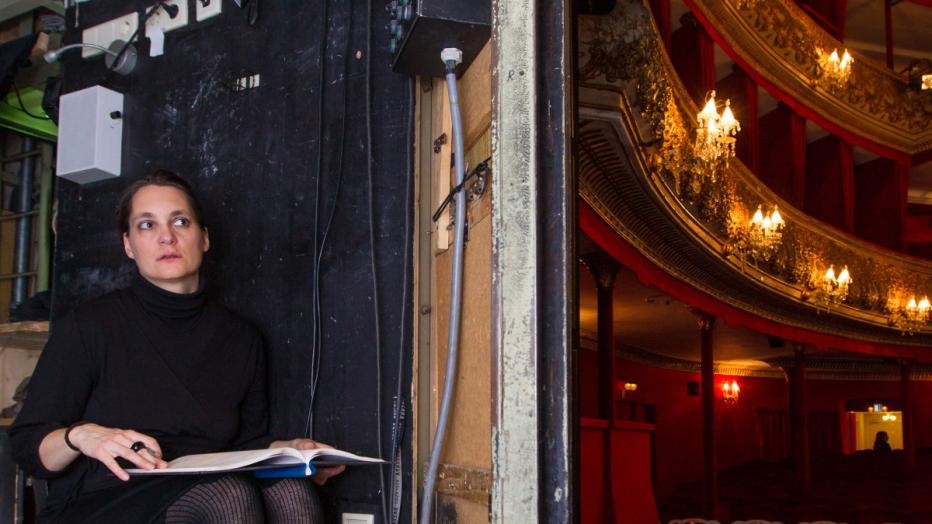
Theater an der Josefstadt © Gilbert Novy, Sabrina Berger
: In smaller theaters, a prompter may sit at the side of the stage.
The "black prompter’s box” seen at the front of European opera stages is more than just a physical structure. It is a reflection of an opera production system shaped over centuries. Although it is rarely seen on Korean stages, the role of those who anchor the music and sustain performances from the shadows continues to exist.
