


In the second half of Act Two of the musical <bare: a pop opera>, there is a number called "Bare." It is not a simple love song. This number is the moment where the work's central themes — concealment and revelation, mask and truth, fear and love — intersect most sharply. "Bare," which also gives the show its title, means naked, unadorned, without pretense. And in this number, that meaning is realized in the most literal sense. Peter and Jason acknowledge their feelings for each other for the first time, and begin to learn how to stop hiding themselves from one another. It is in this number that the two finally say the words "I love you."
At the start of the story, the two share the same feelings yet stand in entirely different places. Peter has no desire to hide his love. Jason, on the other hand, tries to conceal his identity beneath the weight of social expectation, religious doctrine, and family pressure. The love exists, but it cannot be spoken. "Bare" is the scene where that silence first begins to crack. What makes their story so particular is that their parting does not stem from an absence of love. If anything, it is because they love too deeply that they consider letting go. Not out of resentment, but out of a desire to protect each other. The sorrow in "Bare," then, is not the ordinary grief of a breakup. It is the sorrow of the moment one realizes that love alone cannot resolve everything.
As the song moves past its midpoint, the two stand on the same stage looking in different directions. Jason sings that his heart is true, that he wants to say everything honestly — for the first time, he is trying not to hide what he feels. Peter answers that it is too late, that they are still sinners in the eyes of the world. They are singing about the same love, yet they inhabit different moments in time. Jason is only now finding his courage, while Peter has already been wounded and worn down. One is trying to begin; the other is trying to end. Their voices blend beautifully, and yet they are out of step. The line "I want to be free" is especially telling — it compresses the longing of both men into a single phrase, yet the freedom each desires is not the same. For Jason, freedom means a life where he no longer has to hide. For Peter, it means a life where he no longer has to be hurt. They sing the same words while carrying entirely different absences, and it is precisely that gap which makes the song all the more tragic.

Musically, "Bare" also serves as a crucial turning point within the work. The conflict, repression, and anxiety that have built up until now come to a momentary halt, and the inner lives of the two characters are laid fully bare. By focusing on the amplitude of emotion rather than dramatic incident, this scene invites the audience to see Peter and Jason's relationship not as a clandestine romance but as a process of confirming each other's existence. At the same time, the song is paradoxically the beginning of tragedy. In this moment the two are more honest than they have ever been, yet the world of the play does not easily accommodate that honesty. "Bare" reads less as a declaration of happy love than as a brief, luminous instant that foreshadows the pain to come. Because it is the moment of greatest openness, the wounds that follow can only cut deeper.
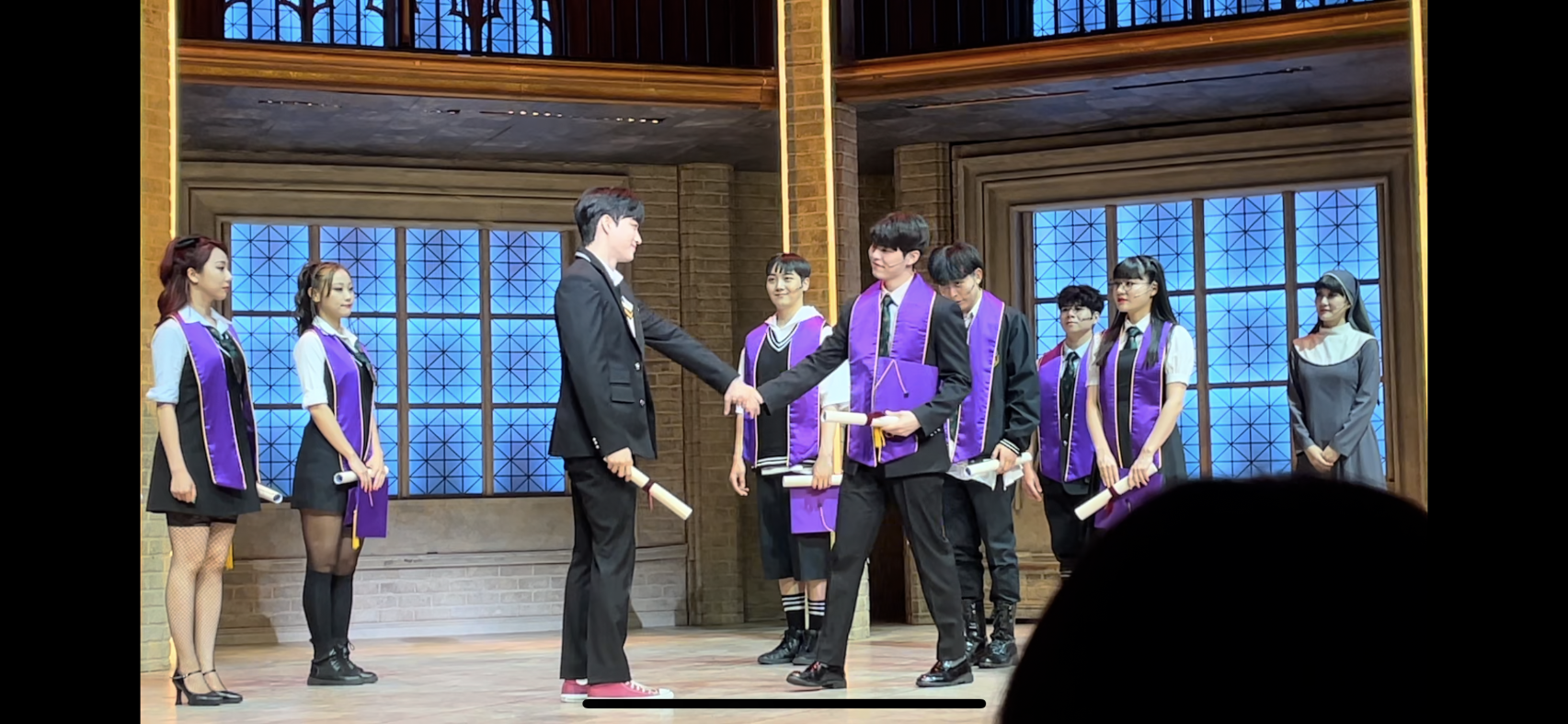
What is stripped away in this song is not clothing. It is guilt and fear, the roles society demands, the expectations of others, and the lies each has told even to himself. What remains when everything has been peeled away is a single truth: love. "Bare" is therefore a love song and a song of truth at once. It sings of parting while holding the most profound confession within it, and it shows us two people growing most distant at the very moment they become most honest. It is a devastating proof that love is, in the end, the act of standing naked before another person. Peter and Jason never manage to resolve everything between them. But at least in this moment, they are true to each other. And perhaps that is the most beautiful form of love that <bare> has to offer.