

A Cheerful Provocation Toward an Absurd World, a “Talmudic Tingeltangel”
On stage, someone stands alone in his underwear. He is Josef K. In nothing but his undergarments, he stands alone on an empty stage, struggling with mysterious men who have broken into his apartment for no apparent reason. Opening with the famous first-person variation of the opening line of Franz Kafka’s novel The Trial (Der Prozess)—“Someone must have slandered me, for no reason”— K. immediately disorients its audience from the very beginning.
Invited to the prestigious Ruhrfestspiele Recklinghausen and staged at Theater Marl, the Berliner Ensemble’s new production K. presents a radically new reading of Kafka’s literature. Director Barrie Kosky, music director Adam Benzwi, and dramaturg Sibylle Baschung weave together texts from Kafka’s The Trial, A Hunger Artist, In the Penal Colony, as well as his diaries, creating an original musical theatre piece.
At the core of the work lies its strange subtitle: “a Talmudic Tingeltangel.” If Kafka’s texts—filled with contradiction and infinite interpretative openness—resemble the Jewish legal and interpretative tradition of the Talmud, then “Tingeltangel” refers to a noisy travelling show combining dance, song, and comedy. Rather than framing Kafka solely as a gloomy writer of modern alienation, the creative team deliberately collides his work with the light, intentionally superficial forms of slapstick comedy and vaudeville. By transforming tragic absurdity through a Jewish comedic sensibility, the production successfully restores Kafka’s “Jewish experience” on stage—his attempt to preserve vitality even within despair.
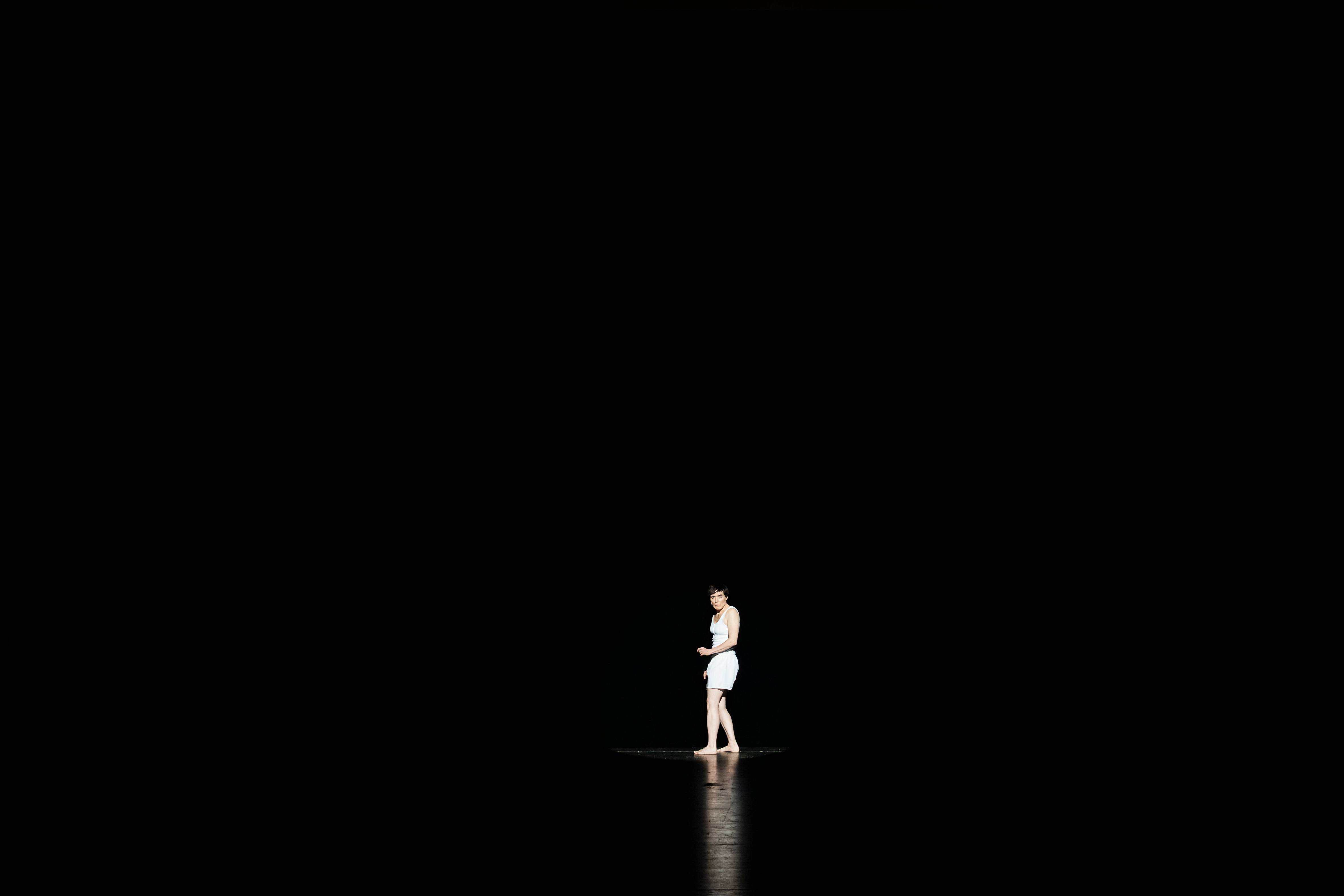
Kafka’s nightmares and reality interwoven on stage
The play follows Josef K., who one morning finds himself prosecuted without knowing his crime and struggles within a labyrinthine and authoritarian legal system. Yet on stage, Kafka’s texts and his real life constantly intersect. Chairs in the courtroom transform into synagogue benches, and the unseen voice of a lawyer reverberates like divine wrath in Hebrew.
The direction injects imaginative visual invention into what could otherwise be a heavy philosophical narrative. For example, when Frau Grubach, the boarding house landlady symbolizing order and cleanliness, sprays disinfectant on stage, the container on her back is shaped like the insect from The Metamorphosis. In the latter half of the play, Josef K. is shown trapped inside a cage-like structure, reading Before the Law in Hebrew as if it were scripture—visually intensifying the helplessness of the oppressed individual and creating a chilling sense of dread. Amid these surreal and dreamlike images, the intermittent presence of Dora Diamant, Kafka’s final lover, brings a gentle warmth like a fragile beam of light within tragedy.
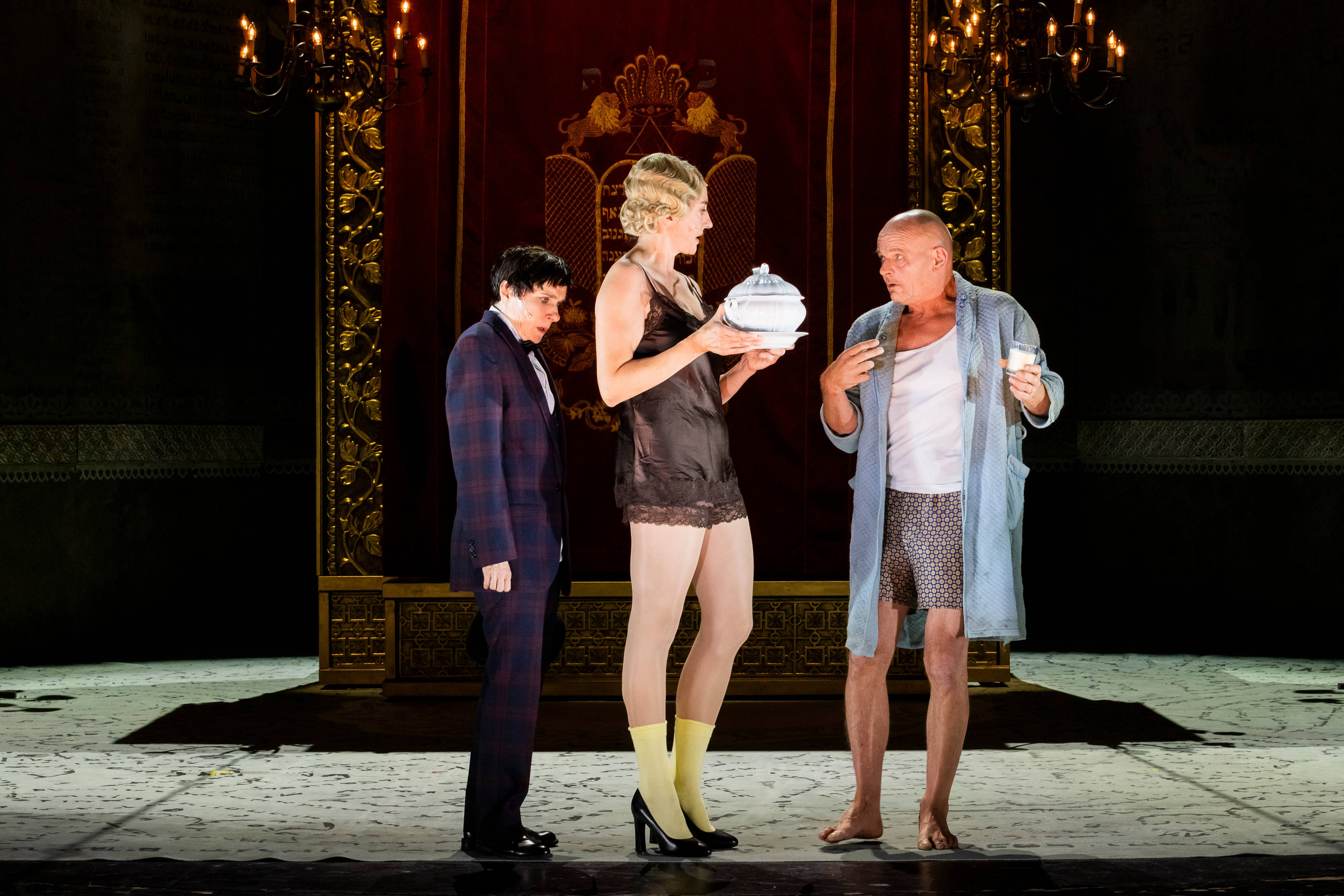
Language and music as alienation effects intensifying tragicomedy
The aesthetic peak of this work lies in its multilingual structure—German, Yiddish, and Hebrew—and its radical musical collage. Barrie Kosky was inspired by Kafka’s own encounter in 1911, when he was deeply moved by a Yiddish theatre troupe in Prague. On stage, Yiddish and vaudeville music are not mere background elements but function as a powerful “alienation effect (Verfremdungseffekt).”
The seven-member live band led by Adam Benzwi reinterprets Bach’s sacred church music—symbols of German high culture—into lively swing arrangements. Schumann’s Dichterliebe, a pinnacle of 19th-century German Romanticism, is translated into Yiddish and sung by Dora Diamant. Even the ancient recorded chant of the Jewish prayer Kol Nidre is inserted. Paradoxically, when exuberant Yiddish songs and dances erupt in the most oppressive and horrifying moments, the audience is thrown off balance. As one critic noted, “the livelier the vaudeville becomes, the darker the overall atmosphere feels.”
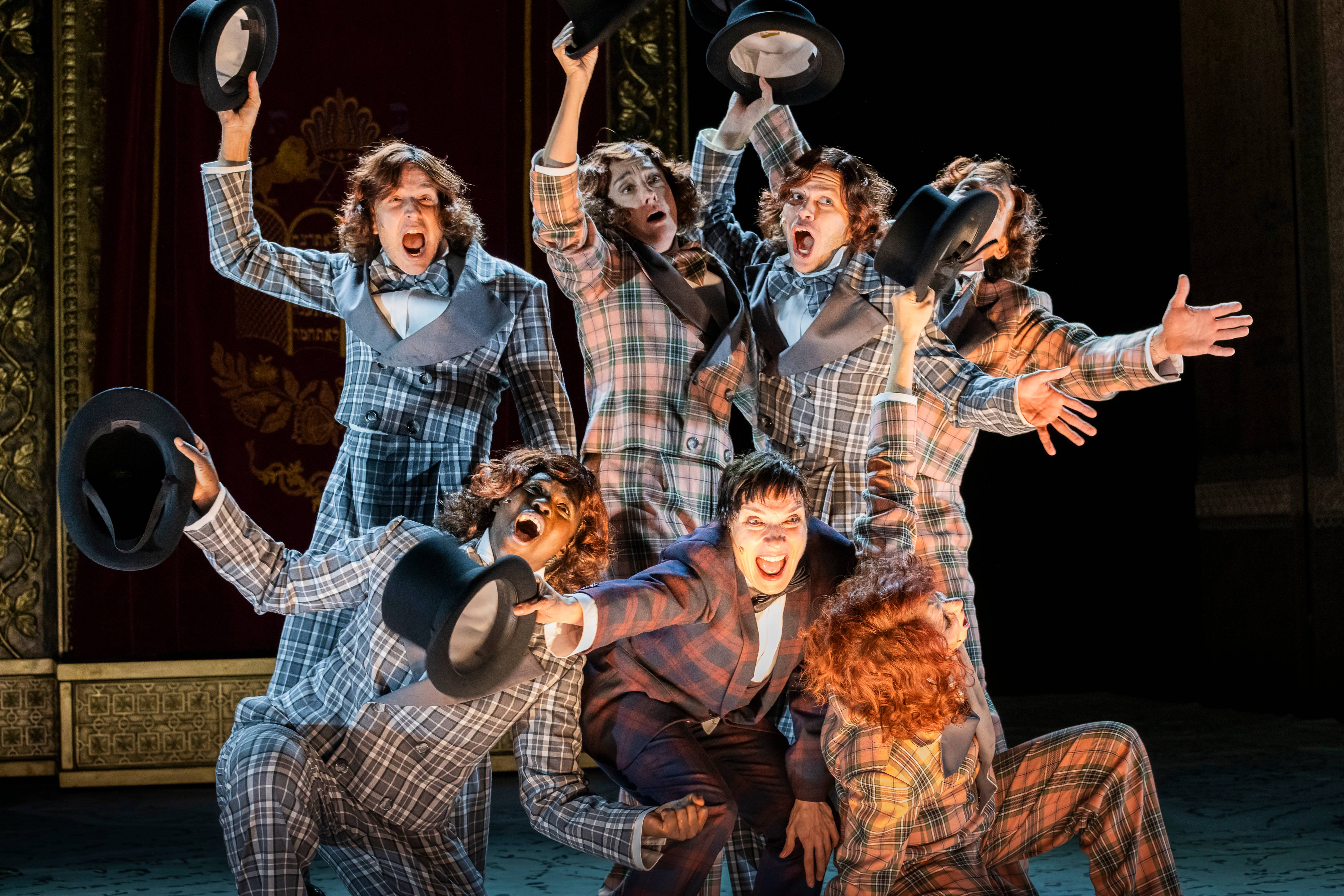
A true ensemble performance
The reason this complex, double-layered concept becomes so convincing on stage lies entirely in the extraordinary performances of the cast. At the center is actress Kathrin Wehlisch, who delivers a remarkable performance shifting between Josef K. and even Kafka himself. Wearing only underwear, she traverses the empty stage for over three hours, singing, arguing incessantly, and even performing tap dance in a physically exhausting display. Even within slapstick comedy, she captures with fleeting expressions and gestures the anguish of an individual crushed by the gears of power—reminiscent of the tempo and melancholic charm of Charlie Chaplin.
Alongside her, soprano Alma Sadé, who plays Dora Diamant and breathes emotional warmth into this dark metaphysical world with her clear voice, and Constanze Becker, who shifts between multiple roles such as Frau Grubach and the caretaker Leni with uncanny charisma, together form a tightly woven ensemble that stabilizes the structure of the performance.
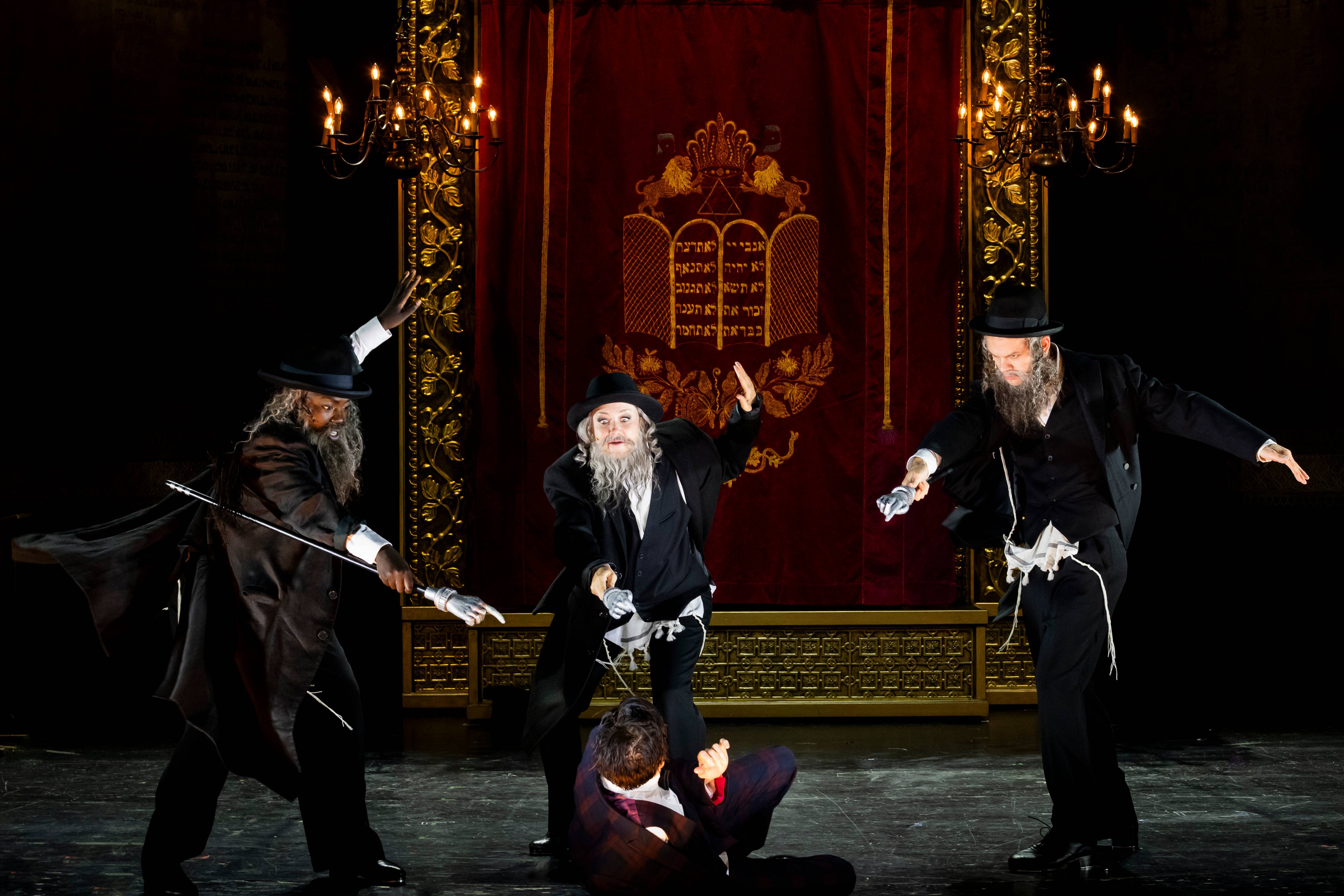
“There is no exit” – yet we must continue living
“There is no redemption in Kafka’s world. There is no escape, no refuge from the oppression life prepares for us. There is no escape—so all we can do is endure within it.” Barrie Kosky’s insight is confirmed through Josef K.’s arbitrary arrest and execution on stage.
The formless violence that Josef K. encounters is not limited to the social stigmatization and discrimination faced by Jews in Kafka’s time. His figure—alienated and crushed by a system he does not understand—becomes a painful warning to contemporary audiences, in an age once again shaped by exclusion and hatred.
On stage, Josef K. struggles endlessly in a strangely cheerful manner, yet remains utterly ignored. Watching him from the audience is not amusing or entertaining; instead, it evokes discomfort and a growing sense of heaviness and guilt. Even the music, filled with bright and upbeat melodies, makes it difficult to laugh freely—the very joy feels inappropriate. This may be the carefully calculated intention of the work: to disguise the most tragic despair as comedy and catch the audience off guard.
Moreover, whenever unfamiliar languages like Yiddish and Hebrew suddenly appear, one is made to feel profoundly alienated—like K. standing before an incomprehensibly vast judicial system. And yet, despite all this absurdity, despair, and fragmentation, the stage itself remains paradoxically full of vibrant life. This strange and contradictory sensation lingers: that even within an exitless nightmare, there is dancing and singing—a relentless “Talmudic Tingeltangel” that echoes Kafka’s own resistance, his refusal to surrender life’s energy even under oppression, leaving a heavy, lasting aftertaste.
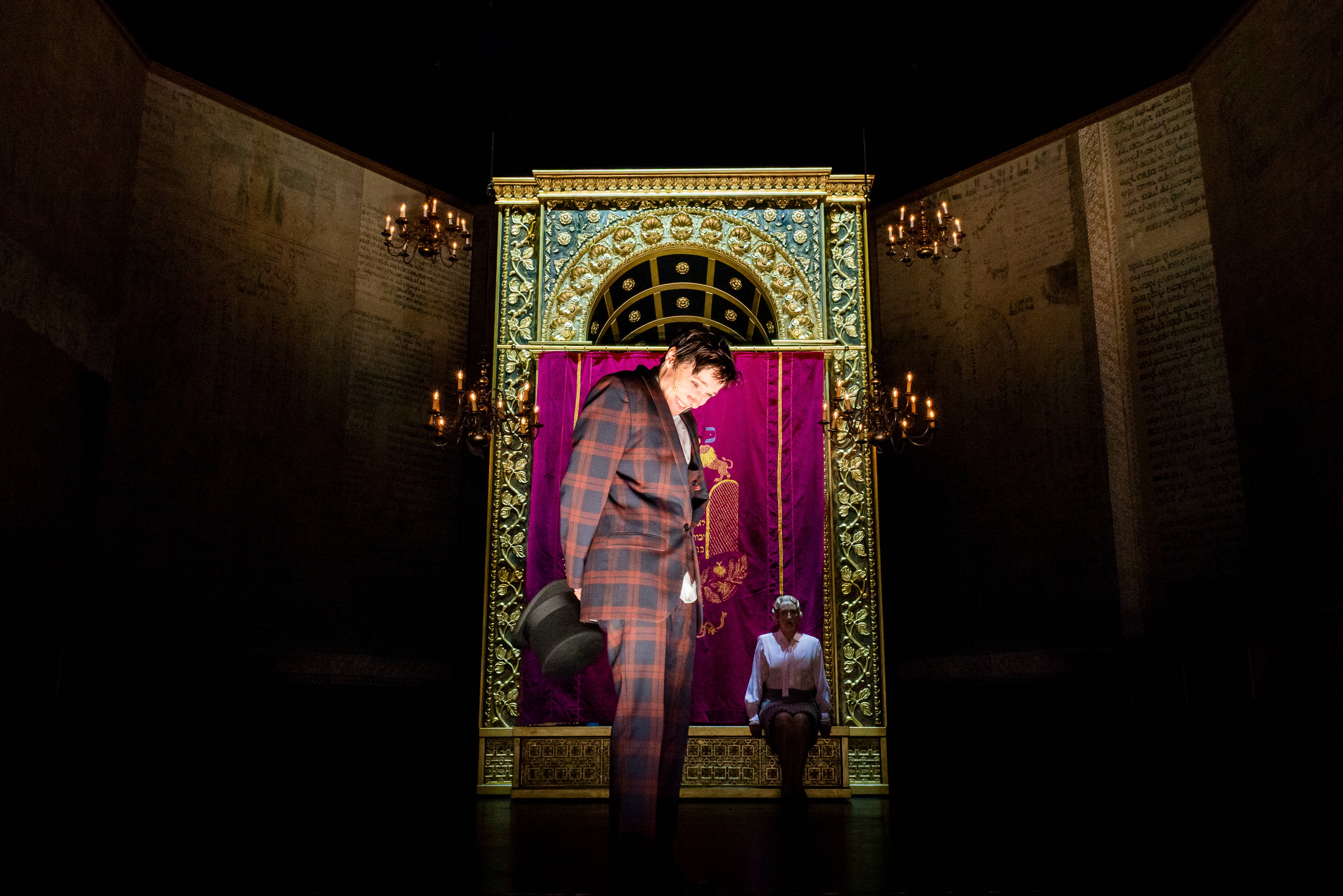
production photos ©Jörg Brüggemann
