
Schiffbau: A Space Where Past and Present Intersect
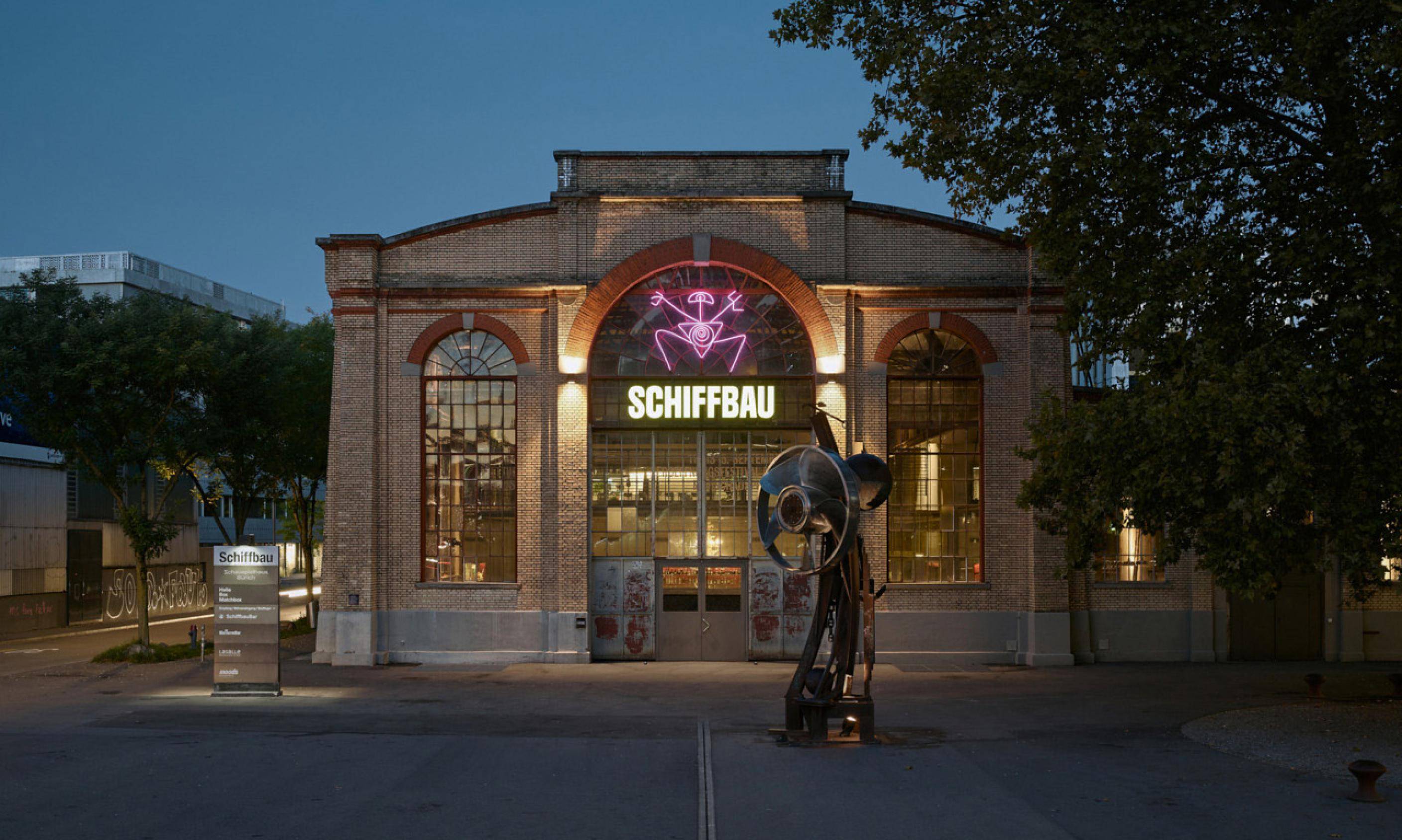
Often described as the cultural heart of Switzerland, is one of Europe’s most renowned theaters. Among its venues, Schiffbau — where Il Gattopardo was staged — is located in Zürich West, one of the city’s trendiest districts, separate from the theater’s historic main building. Opened in 2000, the venue quickly gained international recognition across Europe. As the name suggests, Schiffbau was originally an industrial shipbuilding hall. The theater preserves the skeletal structure of the former shipyard while blending it with sleek contemporary design.
Inside the complex are the jazz club Moods, the stylish restaurant LaSalle, and the Nietturm Bar, making it easy to spend time before or after the performance. Even the sound of real ship horns echoes through the lobby, creating a uniquely immersive atmosphere.
The Play: Il Gattopardo
Based on the novel of the same name by Giuseppe Tomasi di Lampedusa, the stage adaptation of Il Gattopardo was directed by Pınar Karabulut, co-artistic director of Schauspielhaus Zürich. Named one of Capital magazine’s “Top 40 Under 40” in the social sector in 2022, Karabulut demonstrates an extraordinary ability to layer classical texts with a bold and contemporary visual language. In this production, she transforms a 19th-century narrative into a strikingly urgent story for our present day.
Recognized for its outstanding artistic achievement, the production was selected as one of the '10 Most Remarkable Productions' at the prestigious 2026 Berlin Theatertreffen, one of Europe’s most important theater festivals. Following this recognition, the play was also invited to perform on the main stage of the Berliner Festspiele on May 1 and 2, 2026.
Berlin Theatertreffen juror Sascha Westphal praised the production with the following words:
“Such extraordinary theater is rare. The magnificent stage design, costumes, and psychologically precise ensemble acting pull the audience deep into the beautiful and melancholic world of the 19th century, while simultaneously revealing the signs of today’s ‘Zeitenwende’ — a historical turning point. By remaining faithful to the original novel, the production directly confronts our present moment of crisis. Especially in the protagonist’s final monologue, the play transcends the lonely recollection of a dying man and becomes a grave warning: unlike the prince, who resigned himself to decline, we must fiercely fight to protect the values surrounding us today.”
Sicily in the Flames of Revolution
The play is set during the Risorgimento — the turbulent period of Italian unification in the 19th century. At the time, the old Bourbon regime ruling southern Italy and Sicily was beginning to collapse, while revolutionary forces led by Garibaldi ignited sweeping political change. As the glory of the old aristocracy — the “leopards” and “lions” who had ruled Sicily for centuries — slowly faded, a newly wealthy bourgeois class — the “jackals” and “hyenas” — rose to power in their place. This sweeping transformation over half a century forms the grand historical backbone of the work.
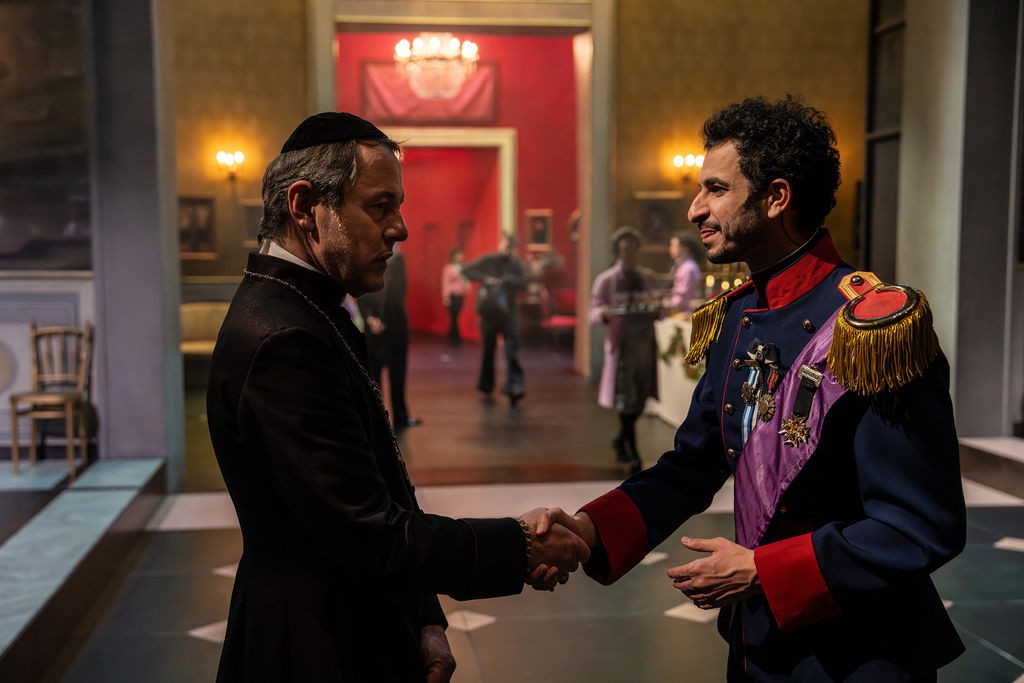
At the center of the story is Don Fabrizio, Prince of Salina, one of Sicily’s great aristocrats, who retreats to his summer estate in Donnafugata to escape the chaos of revolution. Yet even there, the old order begins to unravel. Don Calogero Sedàra, a mayor of common birth, arrives dressed in formal evening wear, flaunting the growing influence and wealth of the bourgeoisie. Meanwhile, Tancredi — the prince’s nephew — quickly recognizes the direction of history. Despite his aristocratic background, he willingly joins Garibaldi’s revolutionary forces and eventually becomes strategically engaged to Angelica, the wealthy and captivating daughter of the bourgeois mayor.
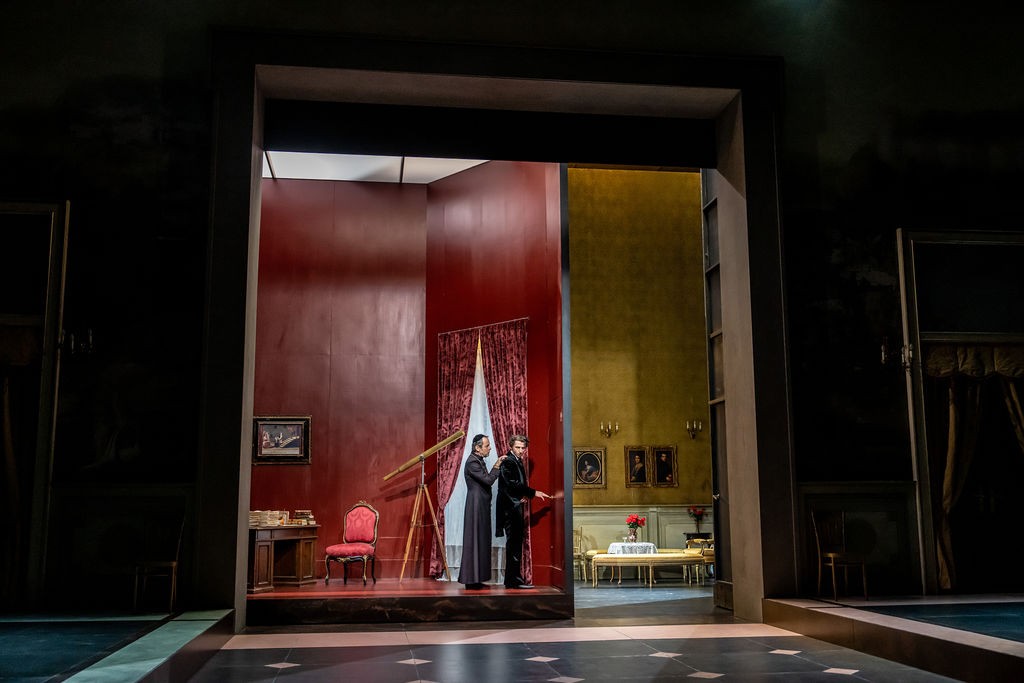
The play portrays the strange alliance between a declining aristocracy and an emerging ruling class, bound together through blood, marriage, and money in the name of survival. Through this uneasy partnership, the production vividly illuminates the bittersweet process of one era fading away as another rises in its place.
Characters Living Through an Age of Upheaval
The play introduces a wide range of characters, each struggling to survive — or being swept away — in the turbulent currents of history:
- Don Fabrizio, Prince of Salina — the “Leopard” himself, symbol of the Salina family. Cultured, dignified, and deeply rooted in the old order, he possesses a painful awareness of his family’s inevitable decline and faces it with quiet resignation.
- Maria Stella, Princess of Salina — The prince’s wife. Nervous and deeply dependent on religion, she is unable to adapt to the rapidly changing world around her.
- Tancredi Falconeri — The prince’s nephew. Though descended from an impoverished aristocratic family, he is practical, opportunistic, and politically astute. In order to preserve his position, he willingly joins the revolutionary forces.
- Concetta Salina — The prince’s daughter. Deeply in love with Tancredi, she becomes one of the tragic victims of the old world, unable to embrace change and ultimately losing him to Angelica.
- Paolo Corbera di Salina: The prince’s eldest son and heir.
- Don Calogero Sedàra —A symbol of the rising bourgeoisie. Though born a commoner, he has amassed enormous wealth and political influence as mayor.
- Angelica Sedàra — Don Calogero’s daughter. Educated and captivating, she returns as a sophisticated young woman who easily captures Tancredi’s attention.
- Carlo Cavriaghi: A young man from Milan in northern Italy, Tancredi’s friend and a suitor to Concetta.
- Father Saverio Pirrone: The Salina family’s Jesuit priest, quietly observing the aristocracy’s moral and social decay from within.
- Don Ciccio Tumeo: An organist and the prince’s hunting companion. A stubborn man who remains blindly loyal to the fallen Bourbon monarchy.
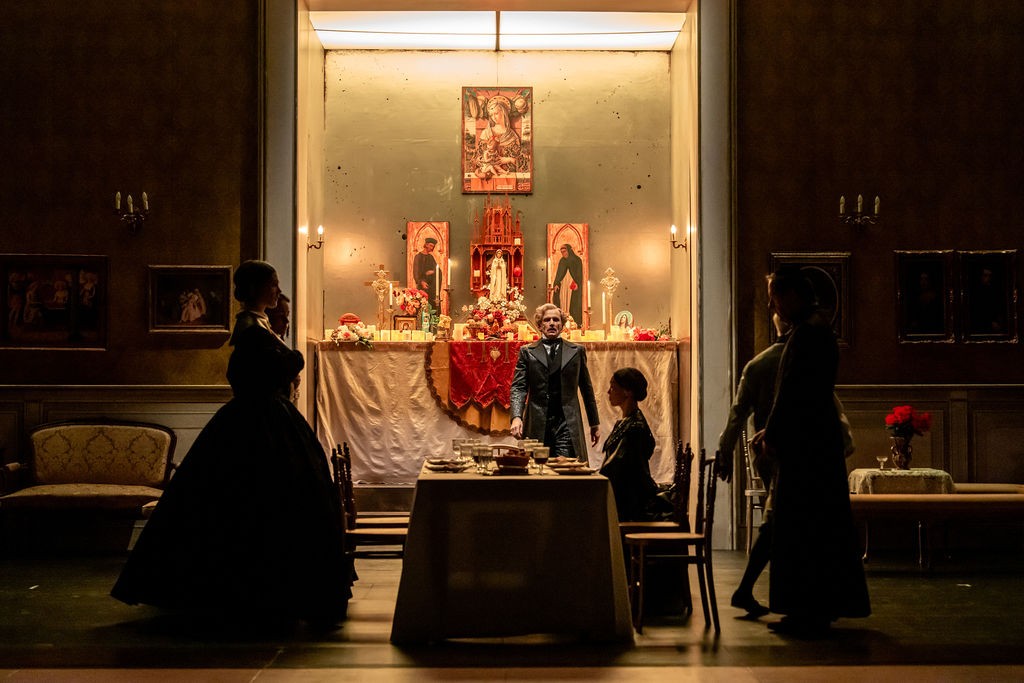
The shifting relationships and mounting conflicts between these characters form the emotional core of the play — a microcosm of Sicily’s larger historical transformation. As revolutionary change intensifies, the old aristocracy increasingly forms uneasy alliances with the rising bourgeoisie in order to survive. In the process, sincere affection and long-held loyalty gradually erode away.
Through the characters’ constant displacement and replacement of one another over time, the production vividly stages the ruthless transition from one fading world to the birth of a new social order.
How Do We Face Change?
What makes this production so compelling is that it does not remain merely a melancholic elegy for a glorious past. Instead, it poses direct and urgent questions to us — people living in a modern society standing at its own historical turning point.
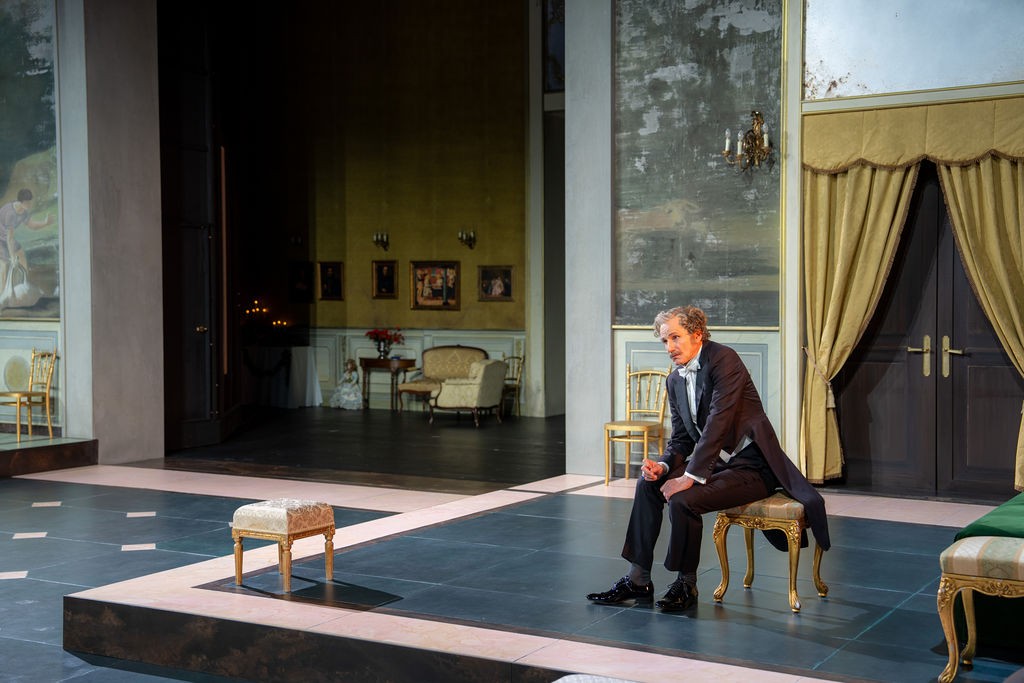
The most overwhelming and distinctive aspect of the play is undoubtedly Act 2, which unfolds almost entirely as a massive 55-minute monologue delivered by the Prince of Salina. While Act 1 dynamically portrays the tangled relationships between characters and the sweeping changes of the era, Act 2 draws the audience completely into the inner world of a single man confronting both death and the end of his age.
This extended monologue, condensing an entire lifetime into one uninterrupted flow, possesses an extraordinary gravitational pull. Without relying on complicated plot developments or constant scene changes, the play allows us to witness a human being facing the decline of his world and the approach of death.
What is especially striking is the prince’s astonishing calmness toward his own downfall. Rather than raging against the violent tides of history, he observes his own disappearance with almost detached rationality, as though watching himself from afar.
In one of the monologue’s most haunting moments, he reflects:
“For decades, I have felt life slowly leaving me. Slowly, yet relentlessly, like grains of sand slipping away. In truth, the years in which I was truly alive amount to no more than two or three. Seit Jahrzehnten spürte er wie die Lebenskraft allmählich verließen, langsam,
aber beständig wie die Körnchen einer Sand... gelebt habe ich wirklich alles in einem zwei höchstens drei Jahre.
This quiet and almost objective resignation — watching life slip away like sand through one’s fingers — leaves the audience with a chilling realization: no power, no system, and no order remains eternal.
And yet, through Tancredi, the play also presents another philosophy of survival.
“If we want everything to remain as it is, everything must change.” Wenn wir wollen, dass alles so bleibt, wie es ist, muss alles sich ändern.
At first glance, the line sounds contradictory. But it ultimately speaks against refusing change or surrendering helplessly before it. For Tancredi, “change” is not betrayal but strategy — the ability to read the direction of history and reshape oneself in order to preserve one’s essence. Rather than standing rigidly against overwhelming waves until one breaks apart, he chooses to ride them. Through him, the play powerfully embodies the idea that survival — and even preservation itself — requires constant transformation.
Our own reality is also defined by relentless upheaval. Every morning seems to bring new systems, new crises, and new forms of instability. Wars and disasters unfolding on the other side of the planet threaten our daily lives in real time.
So how are we supposed to hold onto ourselves amid this storm of constant change?
Each character on stage offers a different answer. Tancredi willingly rides the waves of history and transforms himself. The Sedàras rise as the new holders of power. Meanwhile, Concetta and Don Ciccio cling to the loyalties and values of the old world, only to be left behind.
The choices made by characters written 160 years ago begin to overlap uncannily with the anxieties of our own present. It is precisely in moments like these — when countless values collide and societies stand on unstable ground — that the enduring power of a classic reveals itself. When old systems collapse and new chaos violently takes shape, what face will you choose to greet the coming age of transformation?
In the end, the noble Leopard fades away. Yet the empty space left behind now belongs to us, the people living in the present.
👀Editor's Insights
When I entered the theater, I was surprised by how many people were already inside.
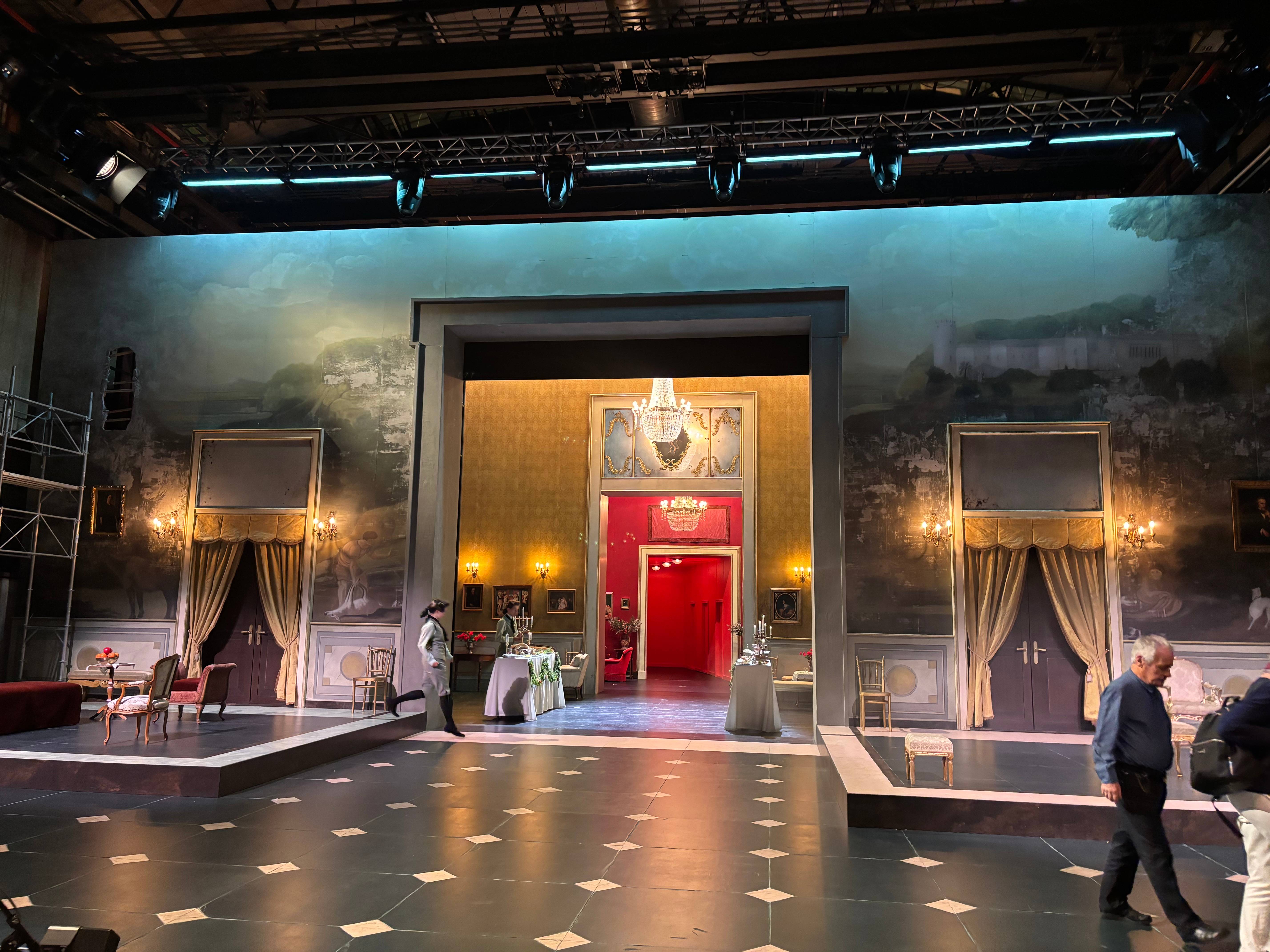
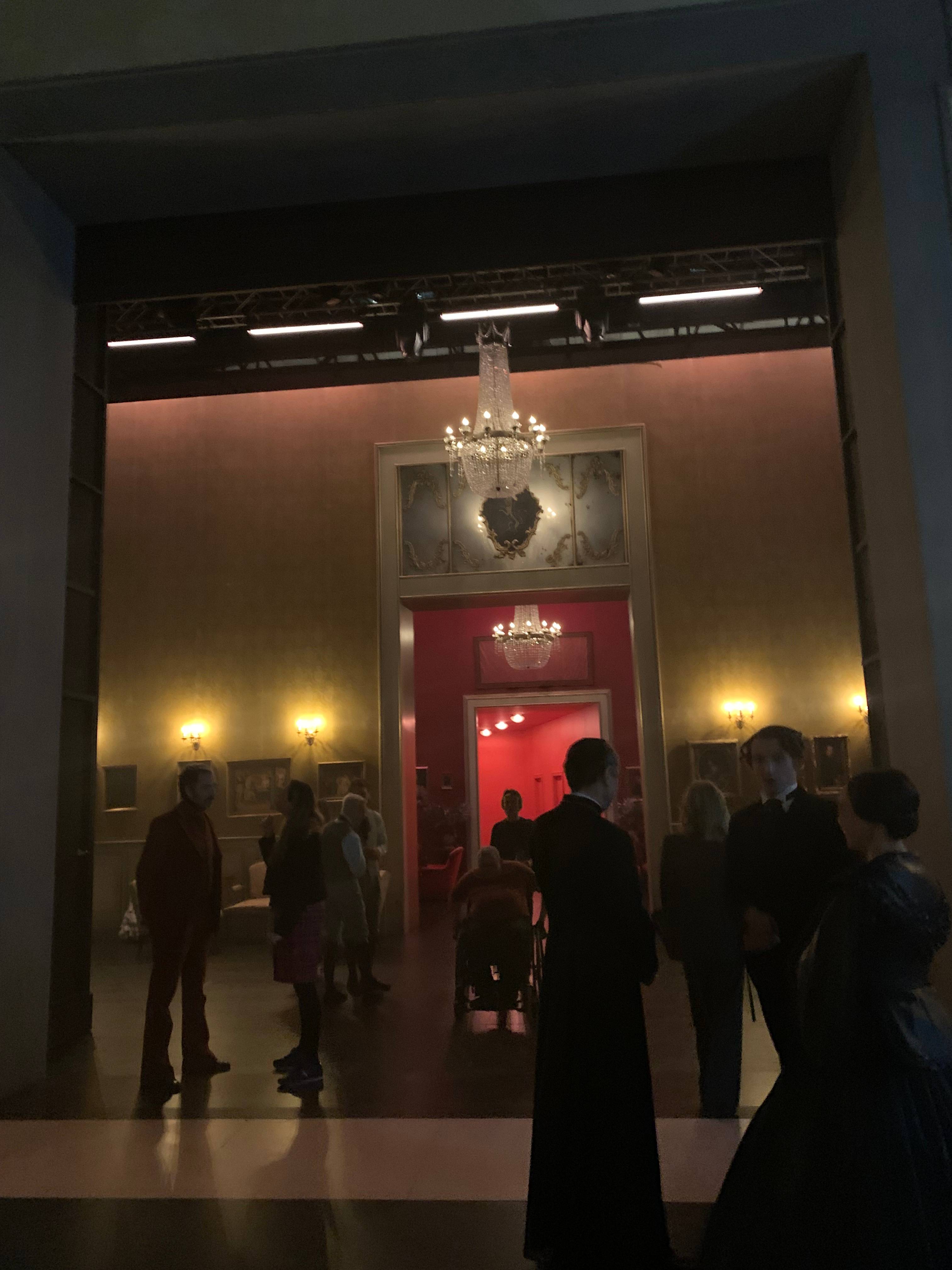
It turned out that the back side of the stage itself had been transformed into audience seating — with the audience entrance located behind the stage as well.
It was a very unusual setup. The stage was built in multiple layers, so the audience actually walked through the set itself before arriving at their seats.
The actors were already performing on stage before the official start of the show. It created an immersive atmosphere even before the performance formally began.
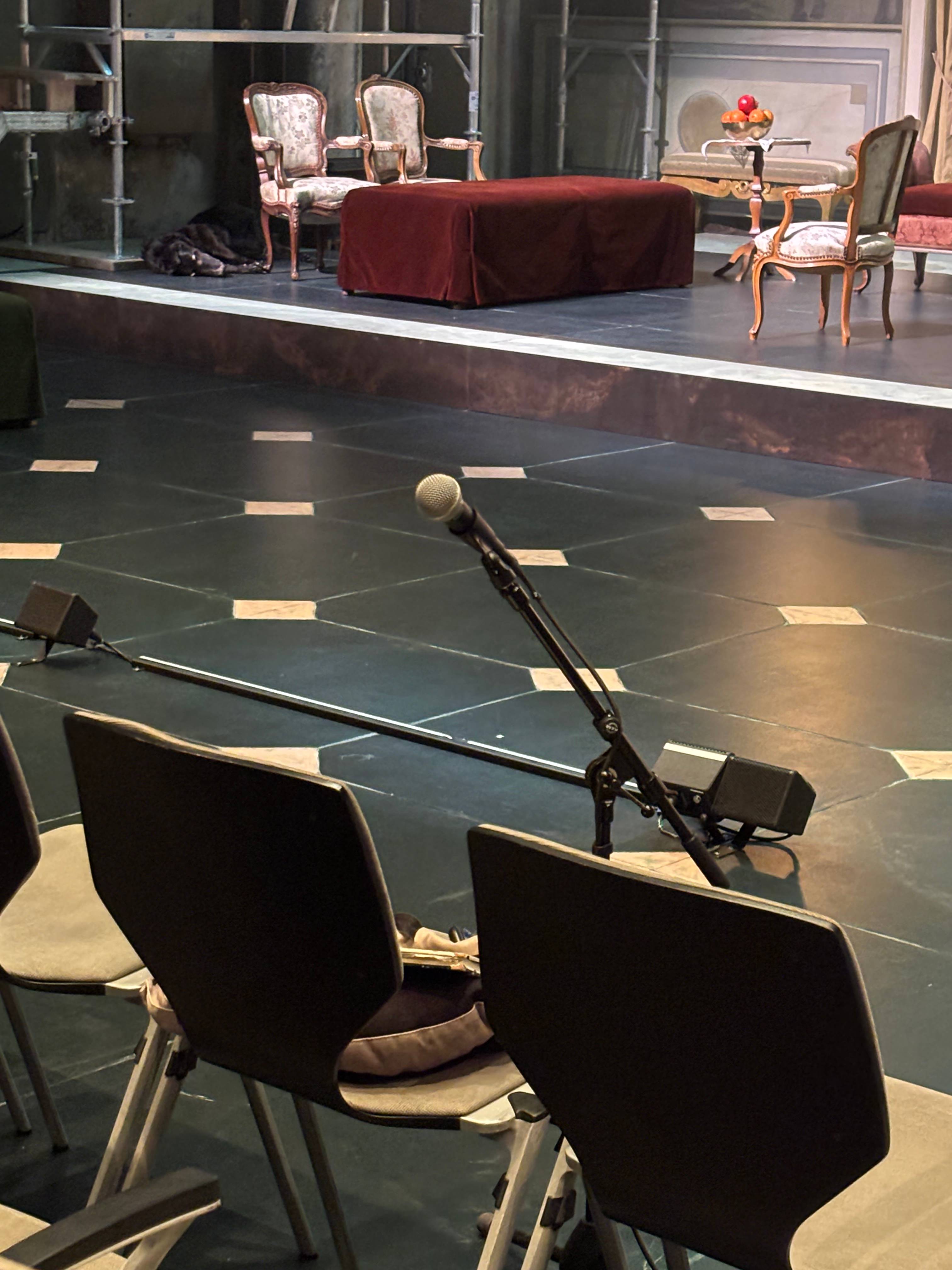
Another interesting detail I discovered was the role of the “prompter.”
There was someone sitting in the very front row, following the script under a small book light throughout the performance. Many theaters in Germany and the Netherlands operate through an “ensemble” structure.
Actors belong to the theater as permanent company members — almost like staff actors attached to the institution.
When productions are cast, roles are assigned only within that ensemble system.
Because different productions rotate constantly, actors may occasionally forget lines.
As a result, human prompters — people whose job is to quietly feed actors their lines during performances — have become an established profession within the theater world.
I found the entire system fascinating!!!!
The deeper I step into the performing arts world, the more there seems to be left to learn :))
